Quark Expeditions Antarctica Review: My Ultramarine Trip
Originally published January 2025. Updated July 2026.
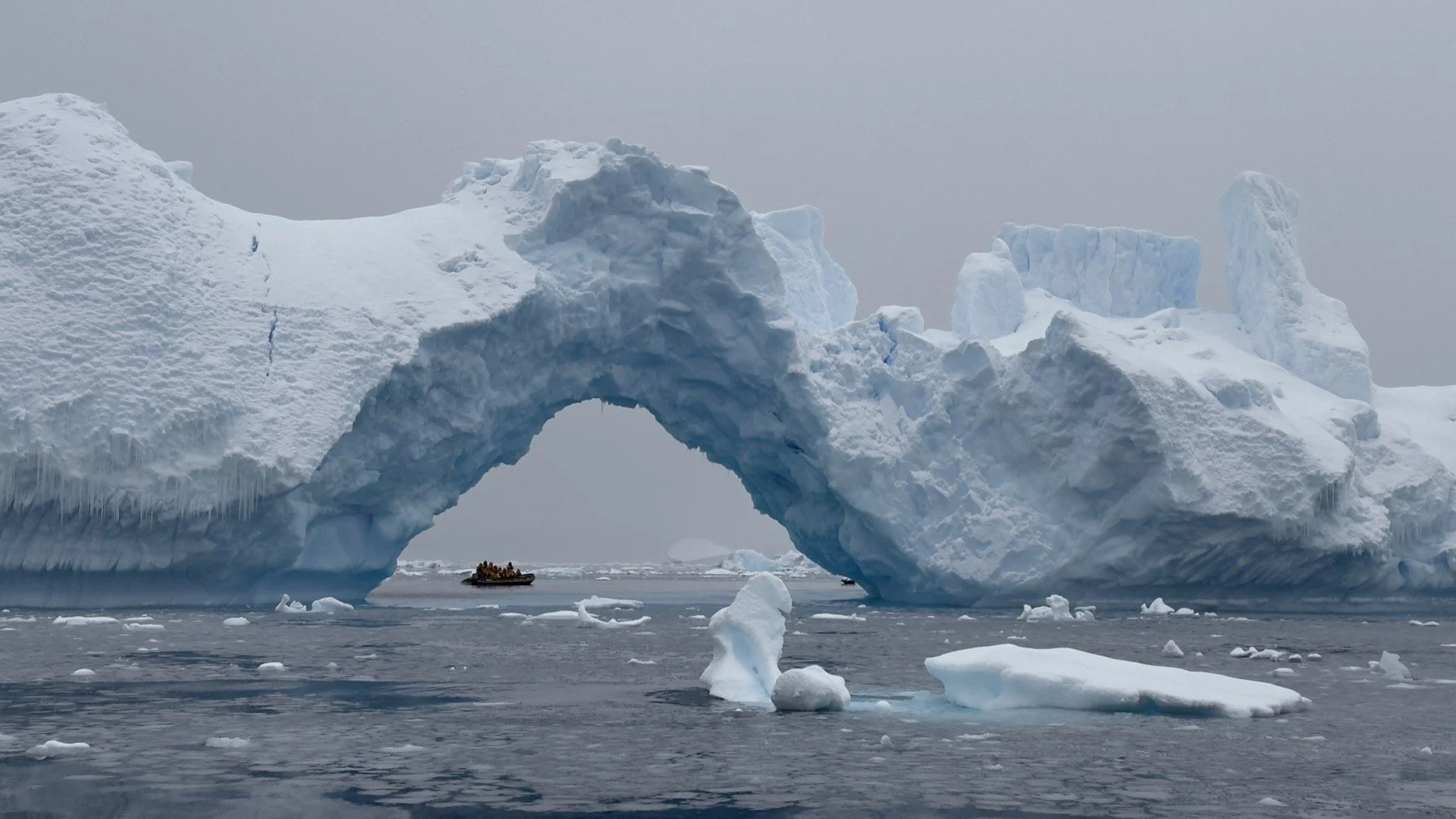
In December 2024, I did an Antarctica Expedition trip aboard Quark Ultramarine. It was a eleven day voyage that started and ended in Buenos Aires, Argentina. If you are researching Quark for your own trip to the seventh continent, this should help you visualize the trip better.
Travel changes you in small ways almost every time. New food, new streets, new ways of seeing the world. But every so often, a trip does more than that. It shifts something. For me, that trip was Antarctica.
I did not plan this one out for months the way I usually do. The opportunity came together quickly, and I did not overthink it. I said yes on the spot, and I had no idea just how much that yes was about to change me.
My Quick Verdict
The short version: if you want a serious, active Antarctic expedition on a ship that still remembers to be comfortable, Ultramarine earns its keep. Complimentary helicopter flightseeing, spacious cabins across the board, and an expedition team that works tirelessly to give you the best experience. It is not the ship for you if you're chasing white-glove luxury or the lowest fare on the market. This is a ship built for people who'd rather be on deck in a parka than in a show lounge in heels.
Best for: active travelers, couples, families, solos first-timers who want a wide sampler of activities
Not ideal for: travelers prioritizing traditional cruise-ship luxury, anyone who wants nightly entertainment, budget-first bookers.
What stood out: the helicopter flight, easily, but almost as much was our expedition leader. He read the weather like a second language, chased the gaps in it instead of waiting them out, and had a habit of finding landing spots that felt genuinely off the map. More than once we were the only ship anywhere near the area, which does something to a place like Antarctica that's hard to describe until you've had it.
For Transparency, I traveled as a paying guest, no travel advisor pricing involved. The perk: I received a substantial onboard credit as I am a Travel advisor affiliated with Fora and we have a Virtuoso partnership with Quark. Just to be clear - my clients get the onboard credit too when they book through me.
Getting to Antarctica
Antarctica is the coldest, driest, and windiest continent on Earth, and also one of the most difficult to reach. There is no direct way in. Every expedition starts with a journey just to reach the starting point, and that journey is part of the experience.
My trip began in Buenos Aires, where I landed and was transferred to the Emperador Hotel, which was included in the package. Quark runs a check in desk at the hotel, where you receive your expedition luggage tags and can ask any last minute questions before departure. Knowing the next stop was the White Continent made even that first night feel surreal.
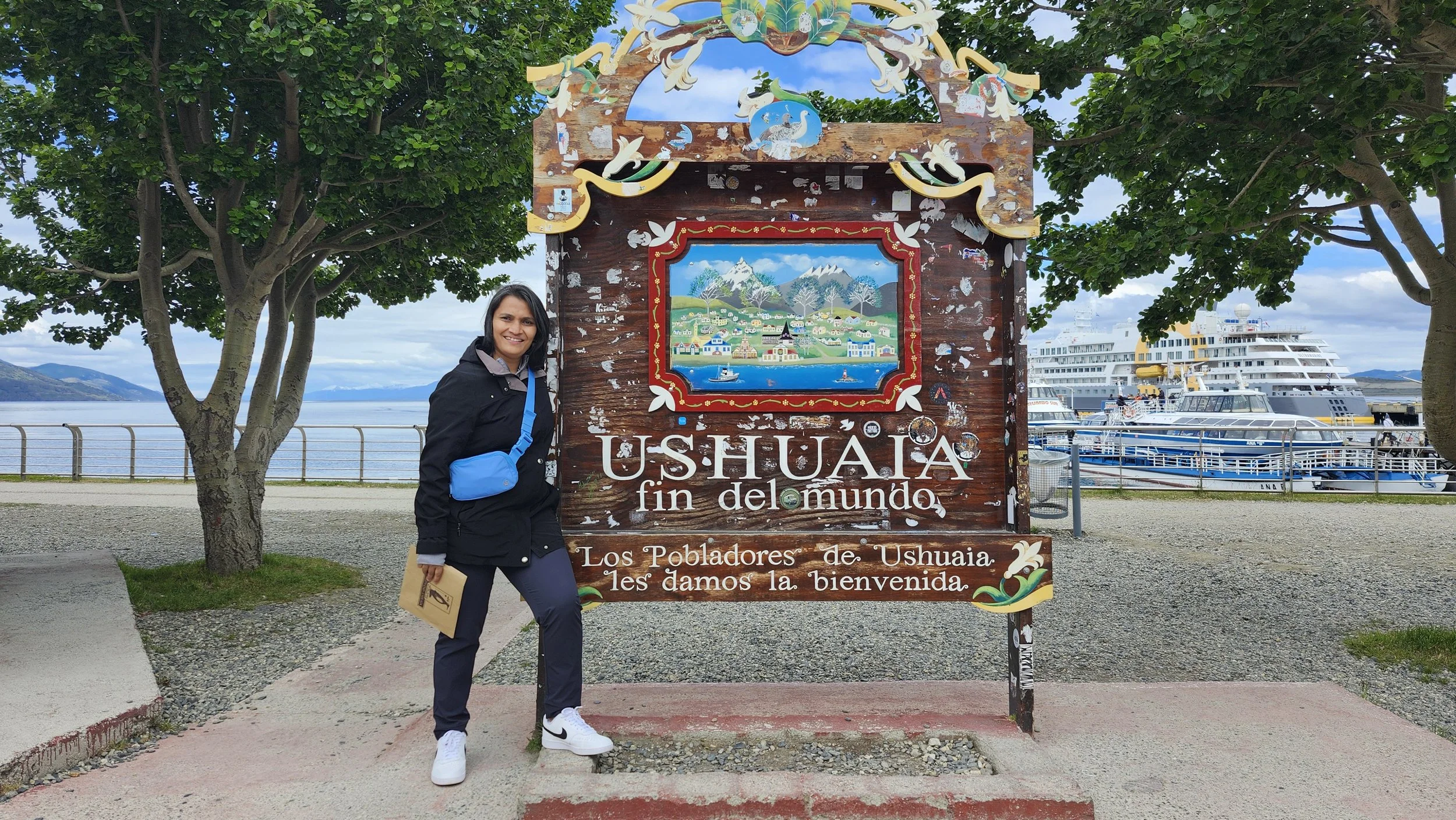
The following morning, we boarded a private charter flight to Ushuaia, the southernmost town in the world and known as the End of the World. Snow capped Andes mountains frame the town, the Beagle Channel runs alongside it, and the streets are lined with small shops selling last minute gear and souvenirs. I walked around, bought some souvenirs, lined up at the visitor center for a “fun” passport stamp (check if your country’s passport allows this before you do it!)
It is a good place to slow down for a few hours before boarding the ship, since it is often the last time you will have reliable cell service for over a week.
That afternoon, we boarded the Quark Ultramarine and set off toward Antarctica.


Crossing the Drake Passage
Every expedition to Antarctica includes a crossing of the Drake Passage, the body of water between South America and the Antarctic Peninsula. It has a reputation for being unpredictable, and for good reason. If you are prone to seasickness, pack medication before you go.
The two days crossing the Drake are not wasted time. You make friends quickly on a polar expedition, and shared anticipation helps that along. Onboard, we attended expert lectures on wildlife, history, and glaciology, explored the ship, and prepared gear for our first landing. By the time Antarctica came into view, the anticipation in the room was hard to miss.
My Drake crossing was a mixed experience. Going south towards Antarctica, we had the Drake Lake. When sailing back up, we had a bit of a shake. Not a lot, but I get seasick and motionsick very easily (I am not a rollercoaster person), so I needed a Dramamine. With that, I did alright.
Five Days Exploring the Antarctic Peninsula
This is the heart of any Quark Expeditions Antarctica trip, and it did not disappoint. We spent five full days exploring the Antarctic Peninsula and the surrounding islands. Every stop depends on weather and wildlife conditions, and your expedition leader makes real time calls about where to land or cruise. No two voyages ever follow the same route, which is part of what makes this kind of travel feel genuinely rare.
The Helicopter Experience
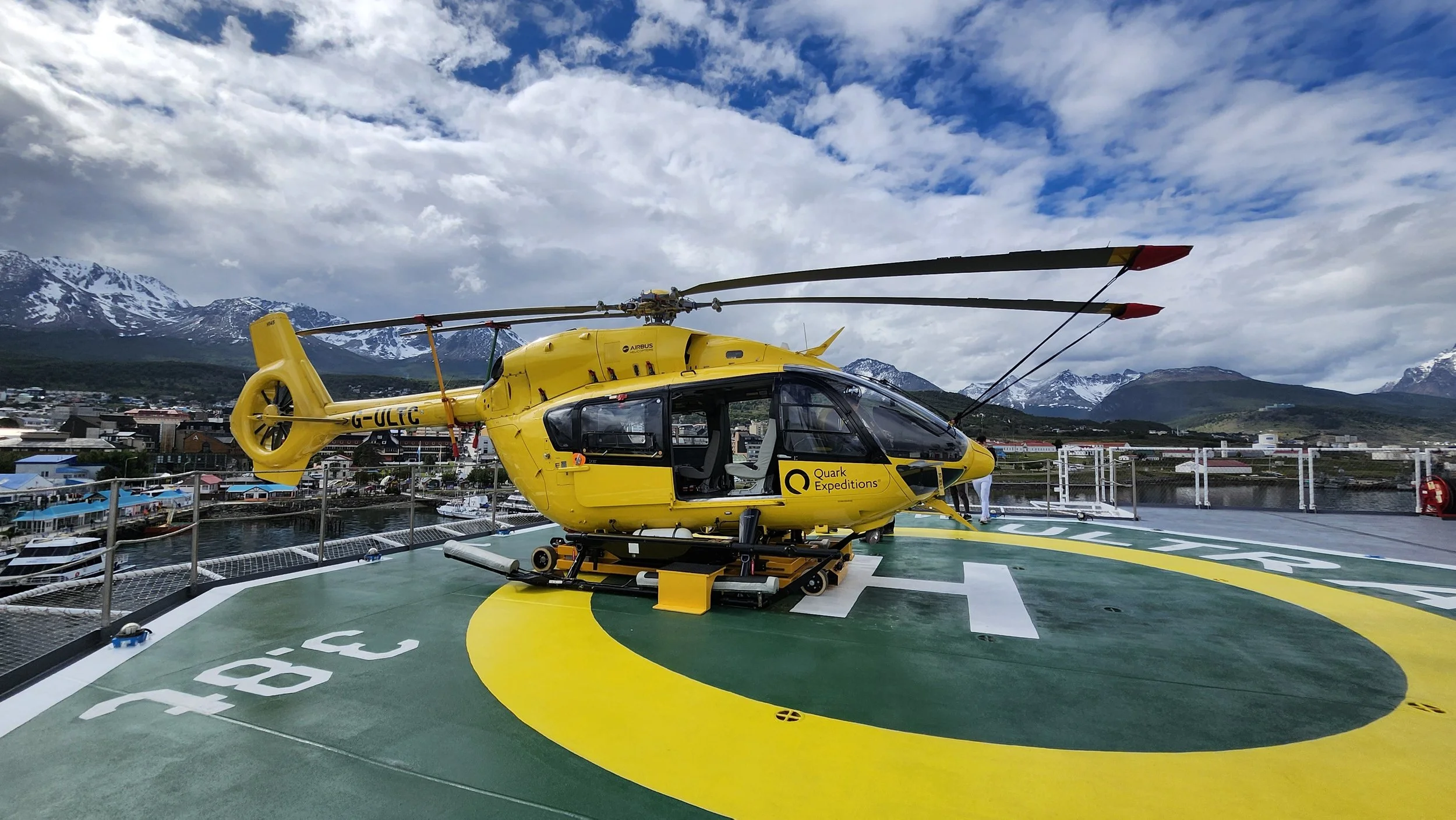
If there's one thing that separates Ultramarine from the rest of the ships and operators, it is this. Two twin-engine Airbus H145 helicopters live on board, and they don't take turns, they operate in parallel, running side by side to move guests through in fewer rotations than a single-helicopter ship ever could.
Was it included? Yes, one flightseeing flight is included free on every Antarctica itinerary Ultramarine runs.
How seats are allocated: Guests are weighed before flights, and seat allocation is based on that weight, for balance purposes across both aircraft. It sounds clinical written out like that, but the crew handled it discreetly and matter-of-factly, and it's simply physics, not judgment.
Flight duration: Typically short, efficient flights, more about vantage point than mileage
Weather dependency: Entirely weather-dependent, which means it can get bumped, so manage expectations here honestly
What you see: From the air, Antarctica stops looking like a place and starts looking like a diagram of itself, ridgelines and crevasse fields and glaciers that from sea level had seemed impressively large but from a few hundred feet up revealed themselves to be genuinely the size of a borough. One glacier we flew past looked about the size of Manhattan, and it took a solid minute of staring before my brain agreed to believe it. Beauty moves me - so I actually welled up on this flight!
Otherwise on a daily basis you are doing one or more “landings” that could be -
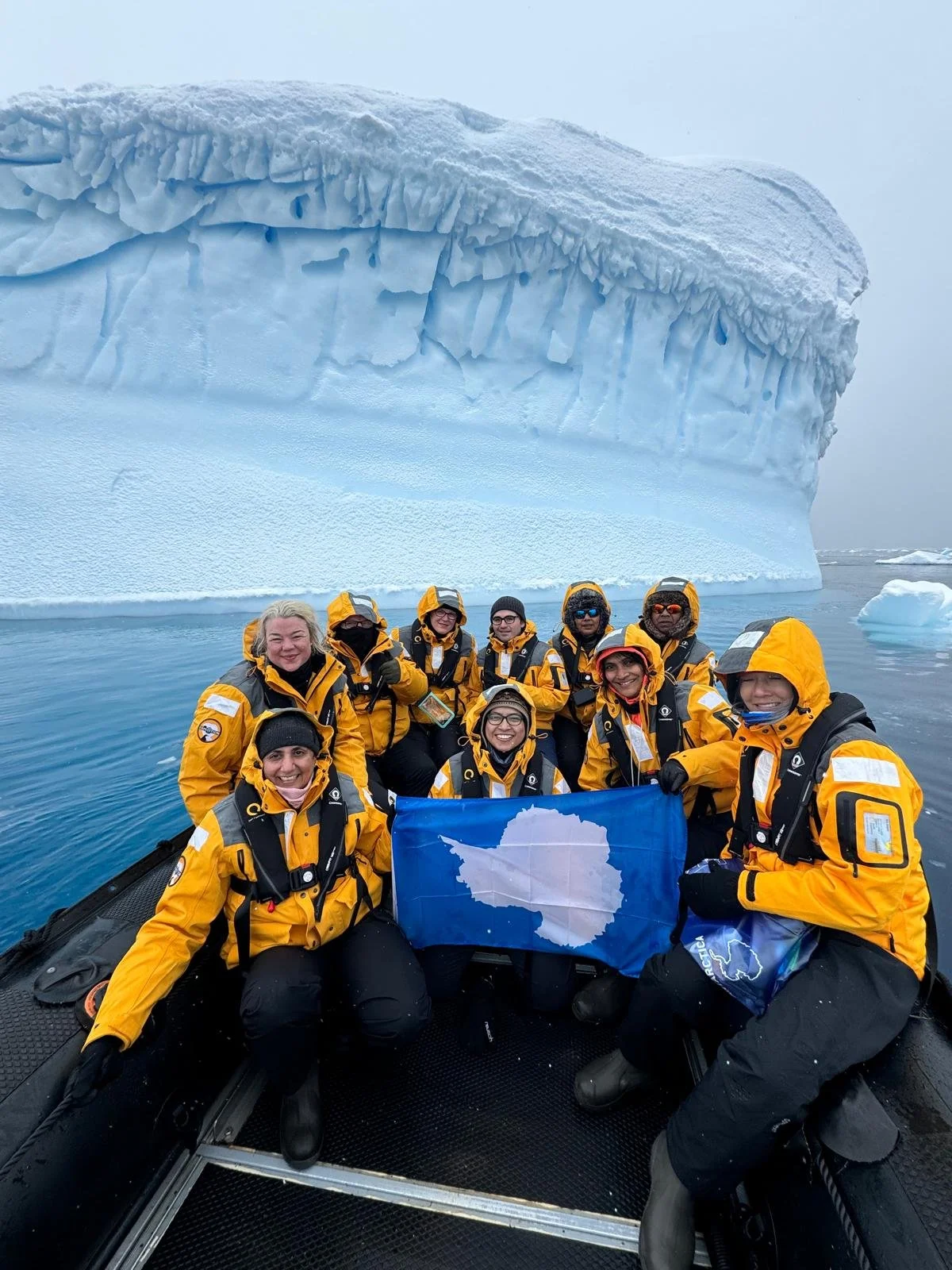
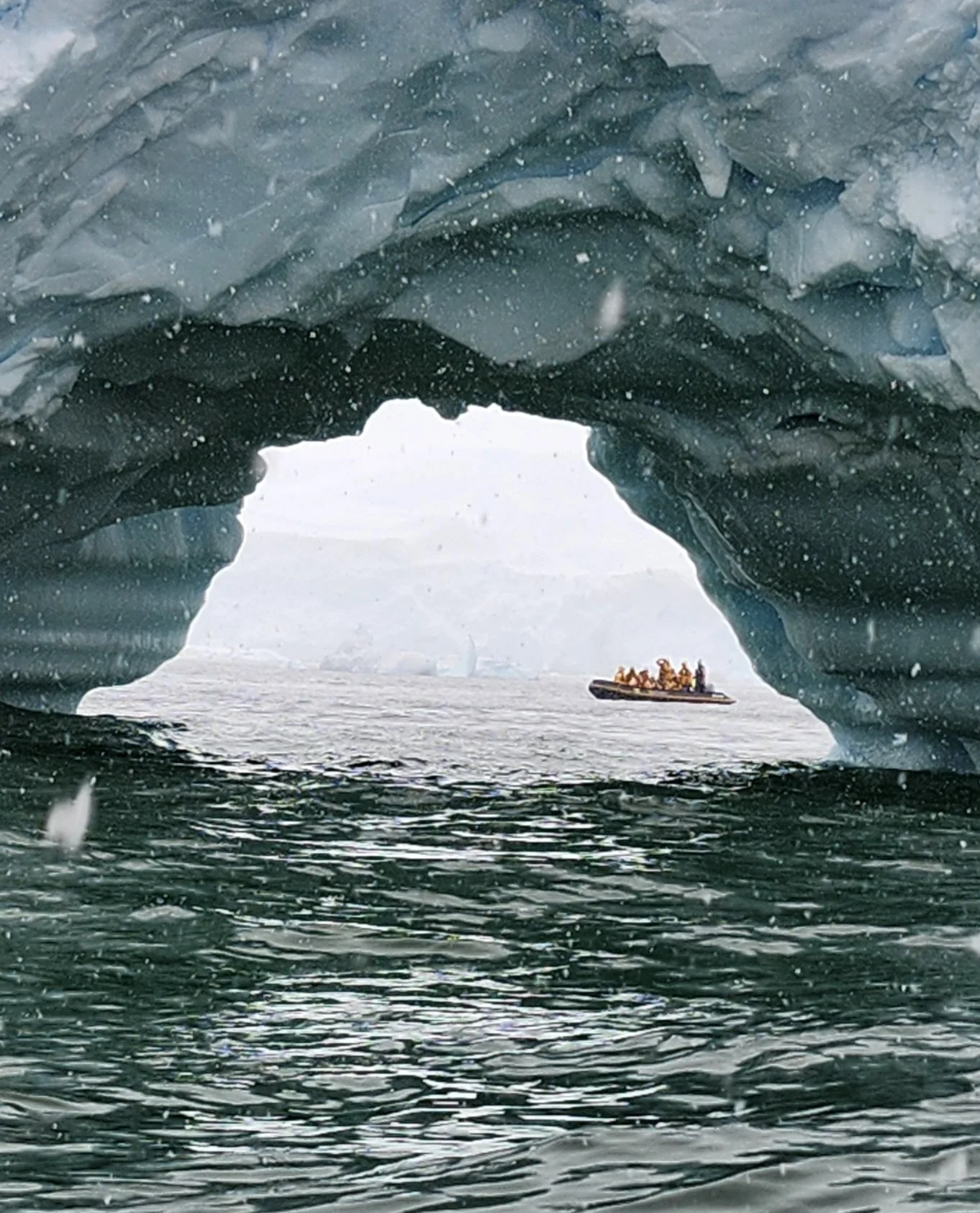
Zodiac cruising among icebergs, with regular whale and seal sightings
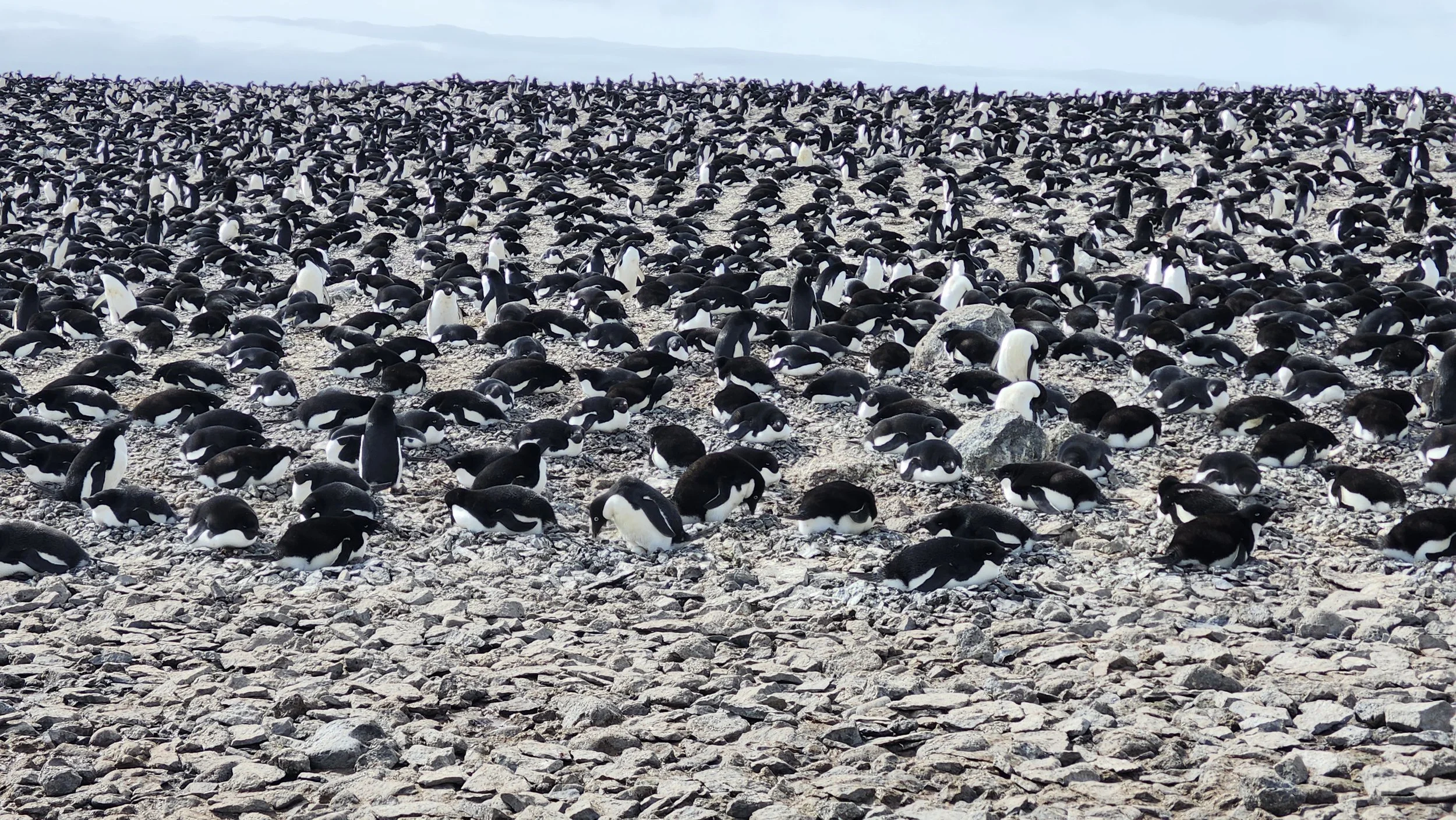
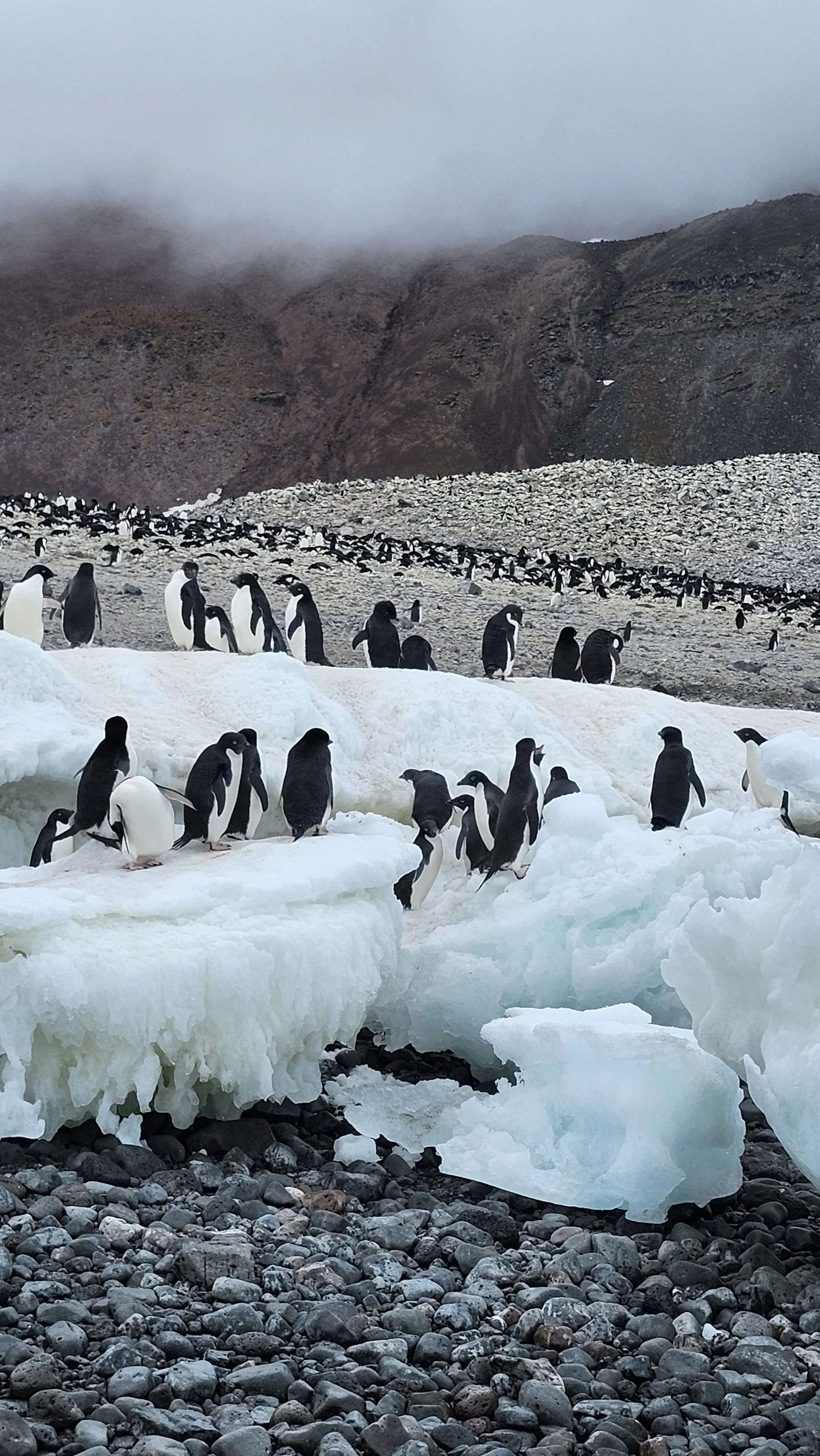
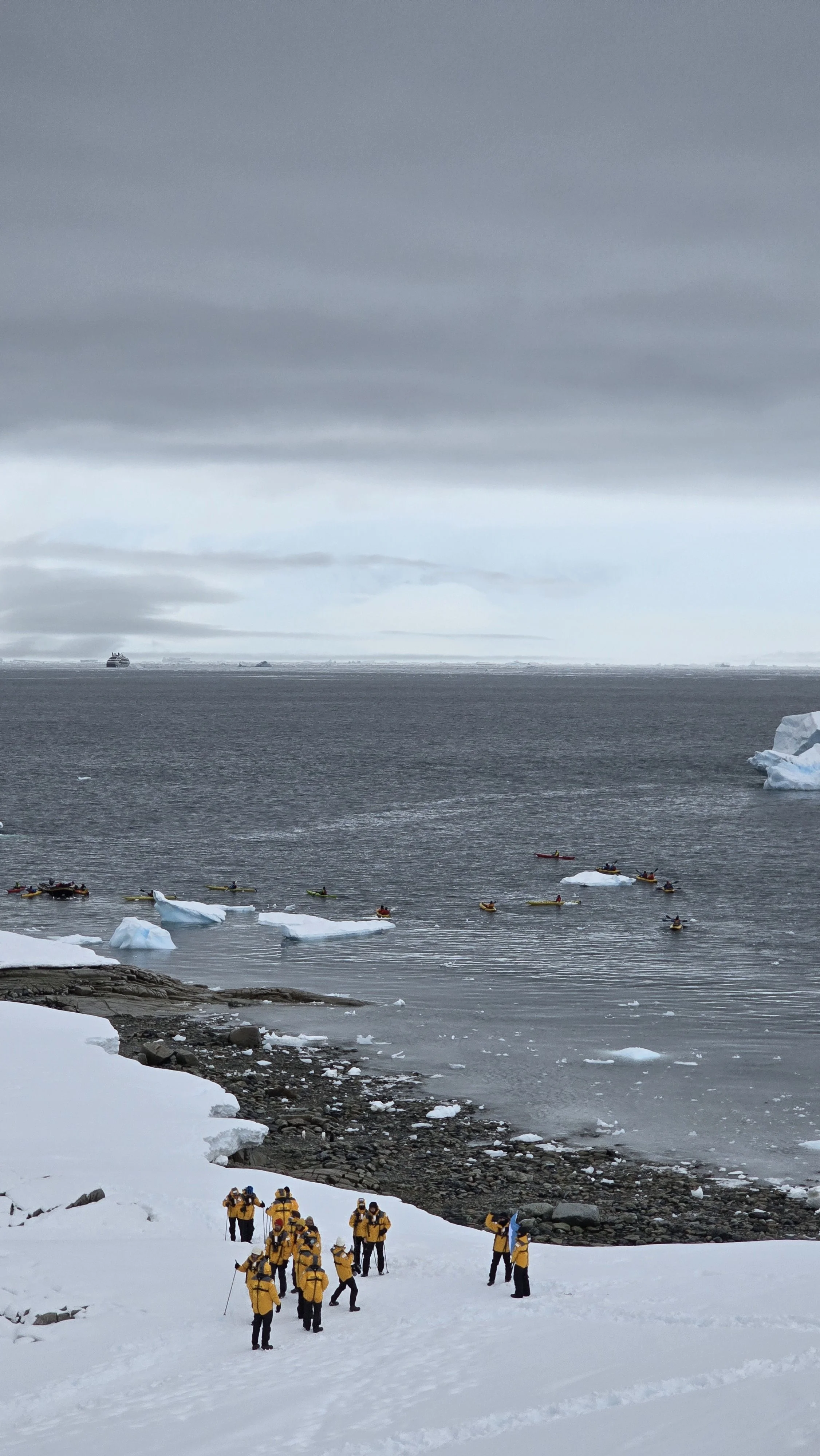
Landings directly on the continent, walking among penguin colonies
Hiking snowy slopes for panoramic views of the Peninsula
Optional sea kayaking and paddling excursions. You typically pay extra for these, and you have to book early. I booked my trip very close to sailing date, so they were all sold out.
There is also the Polar Plunge, for anyone brave enough to jump into freezing water
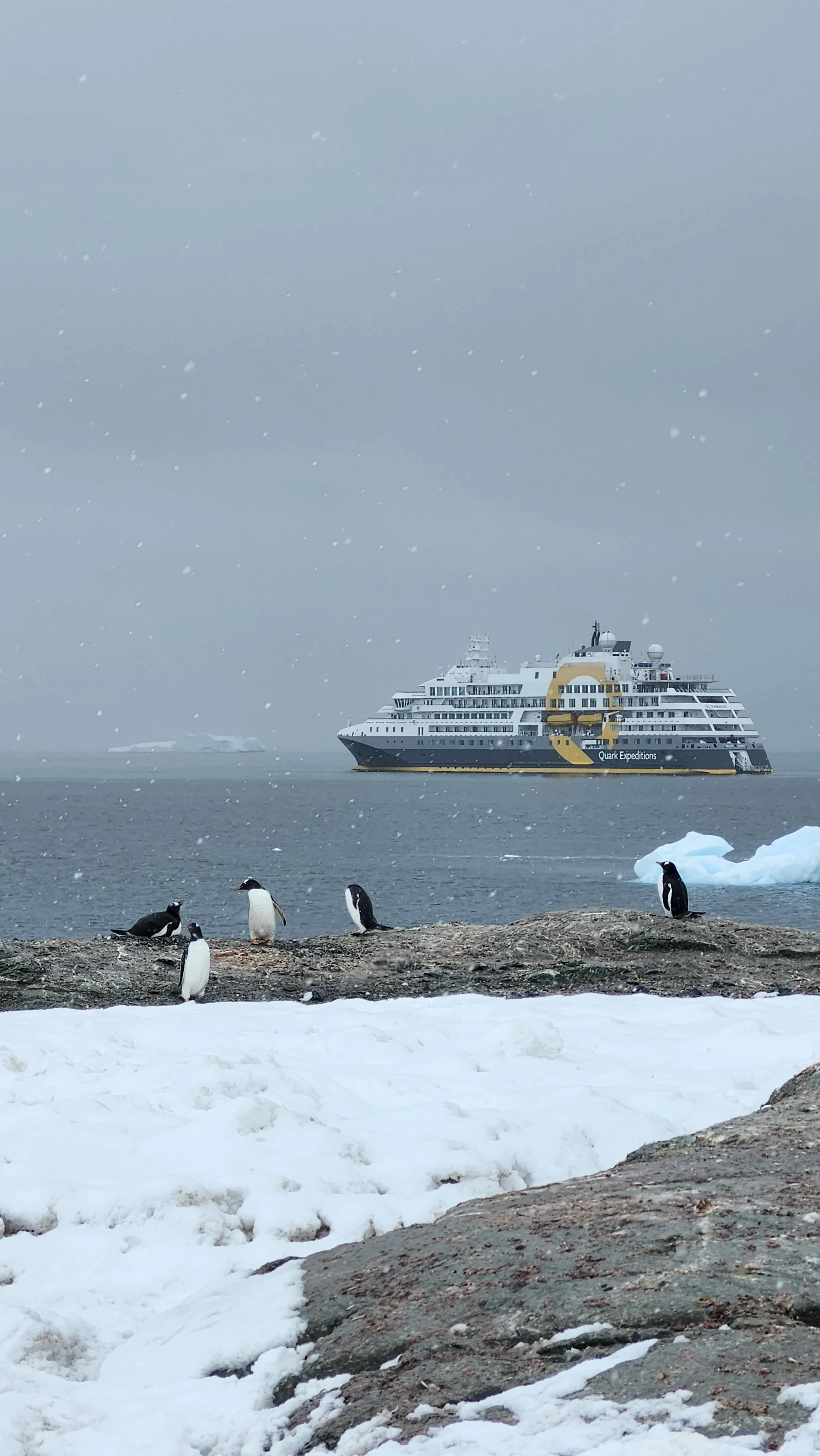
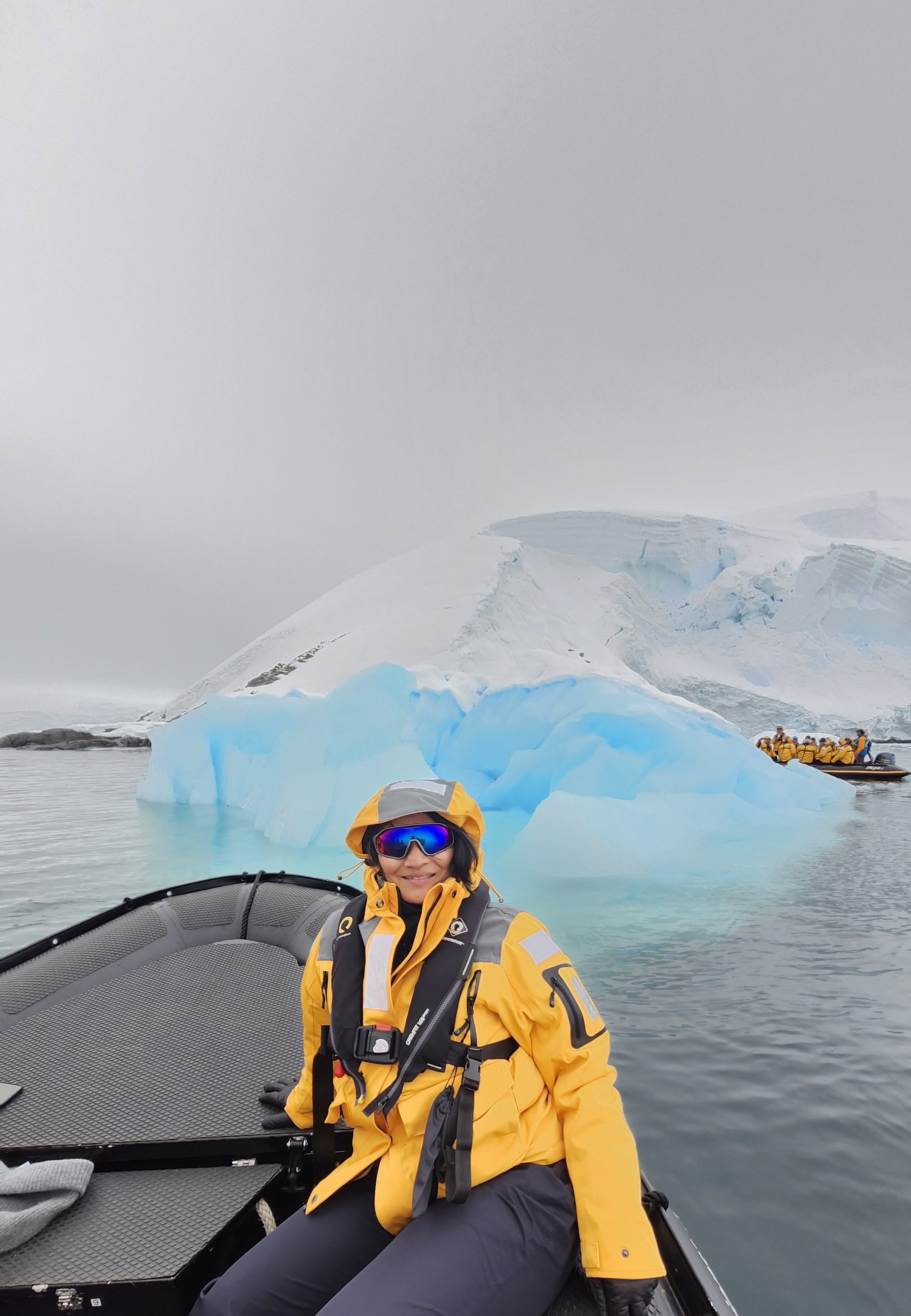
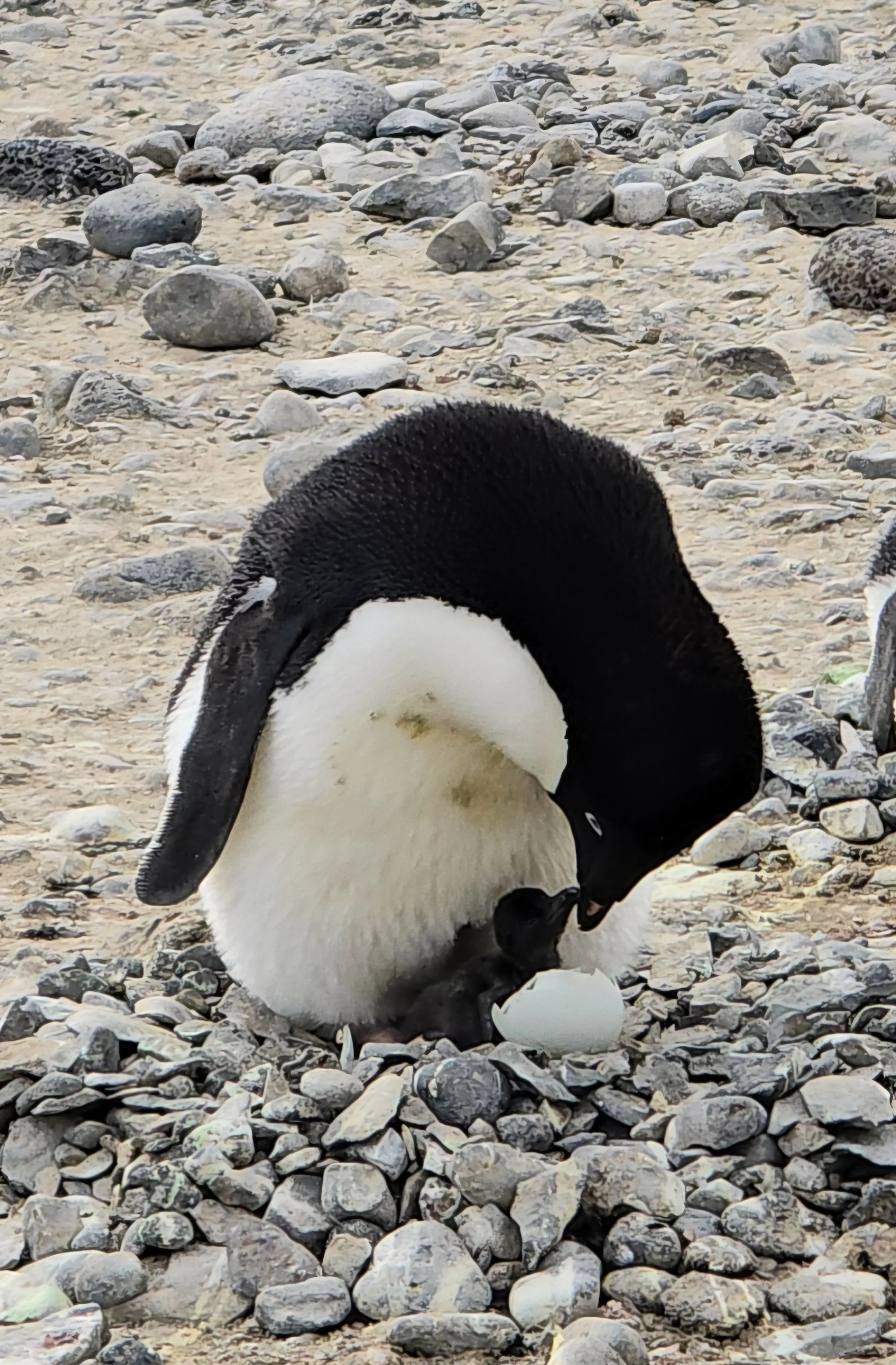
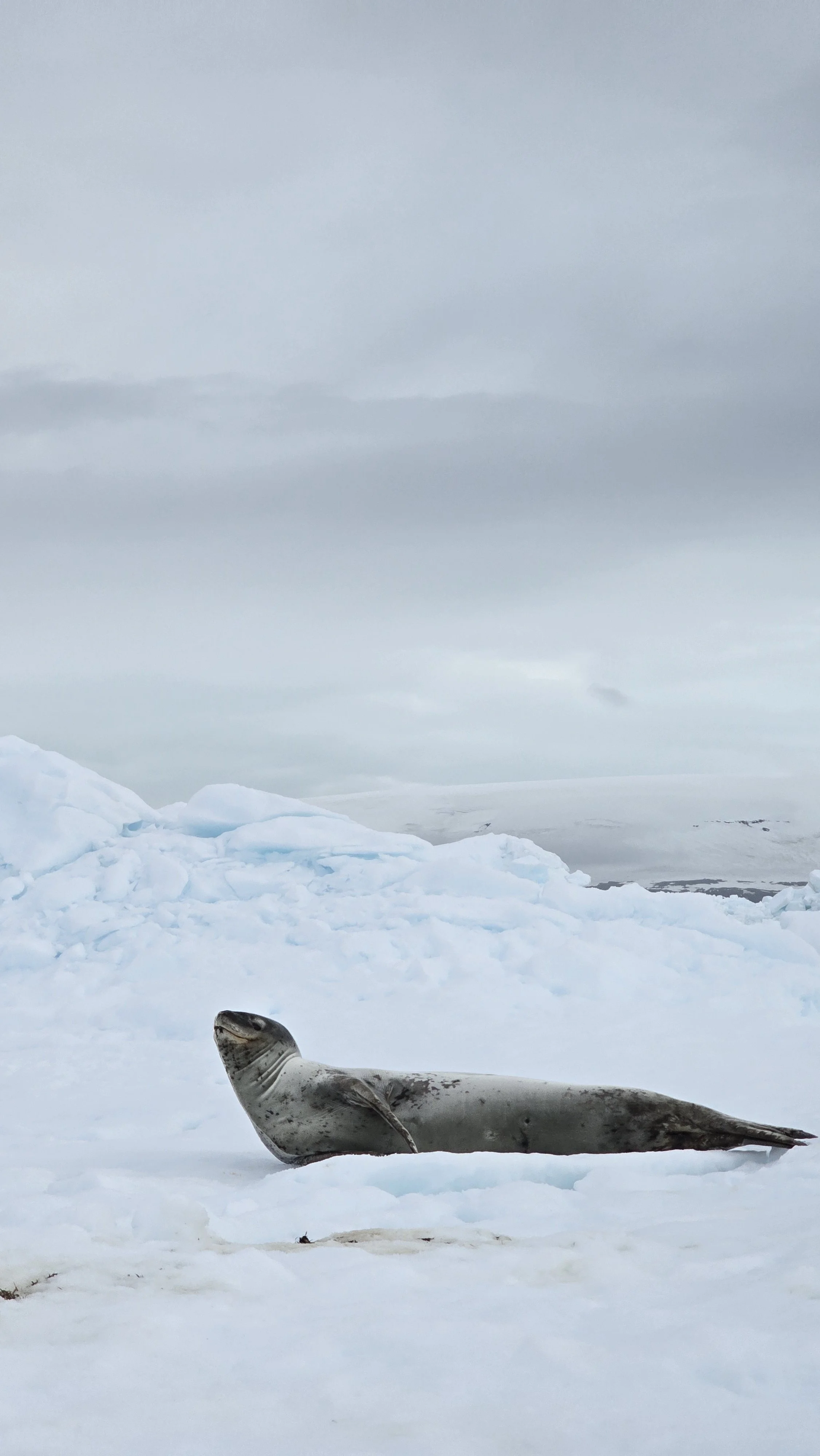
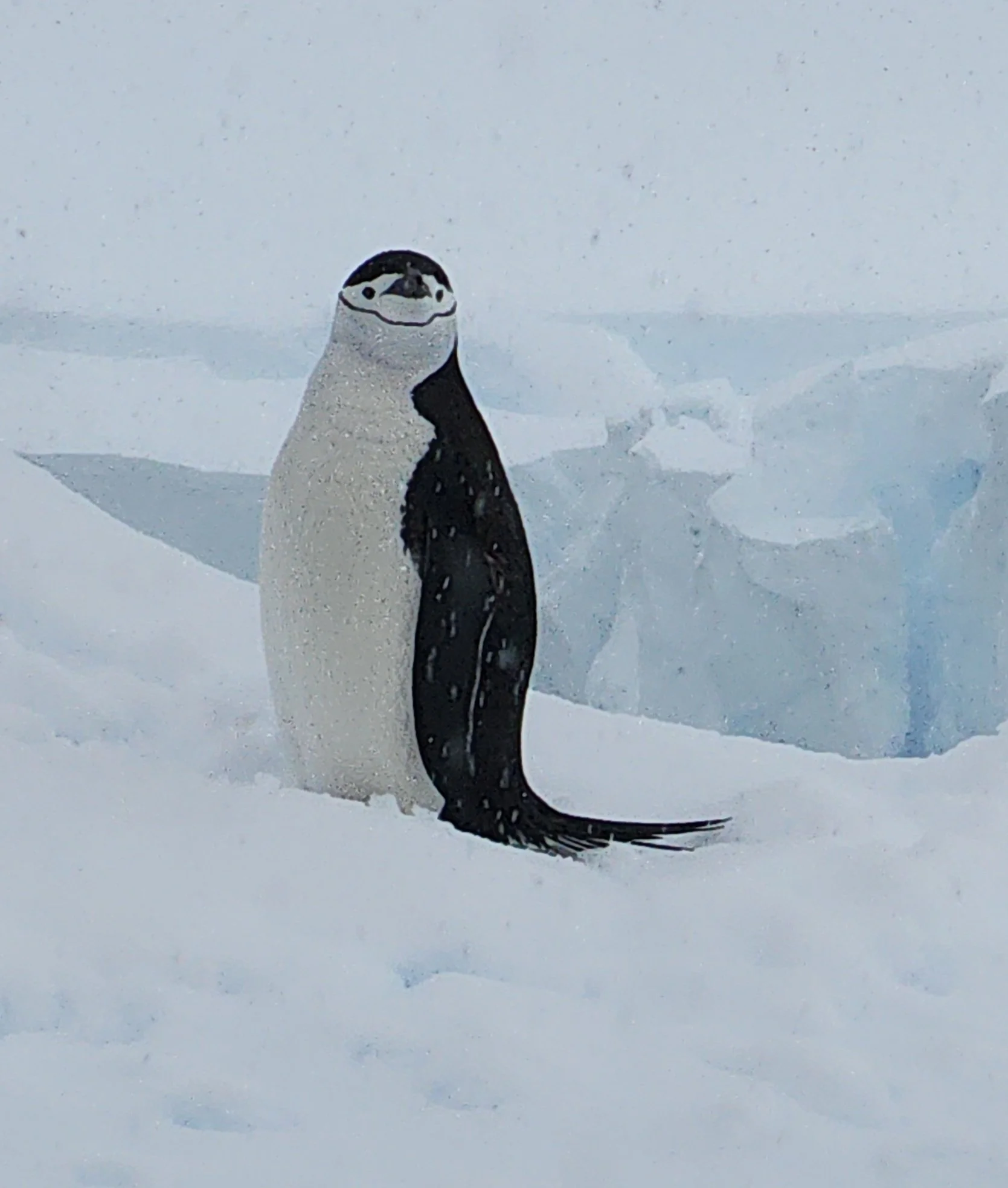
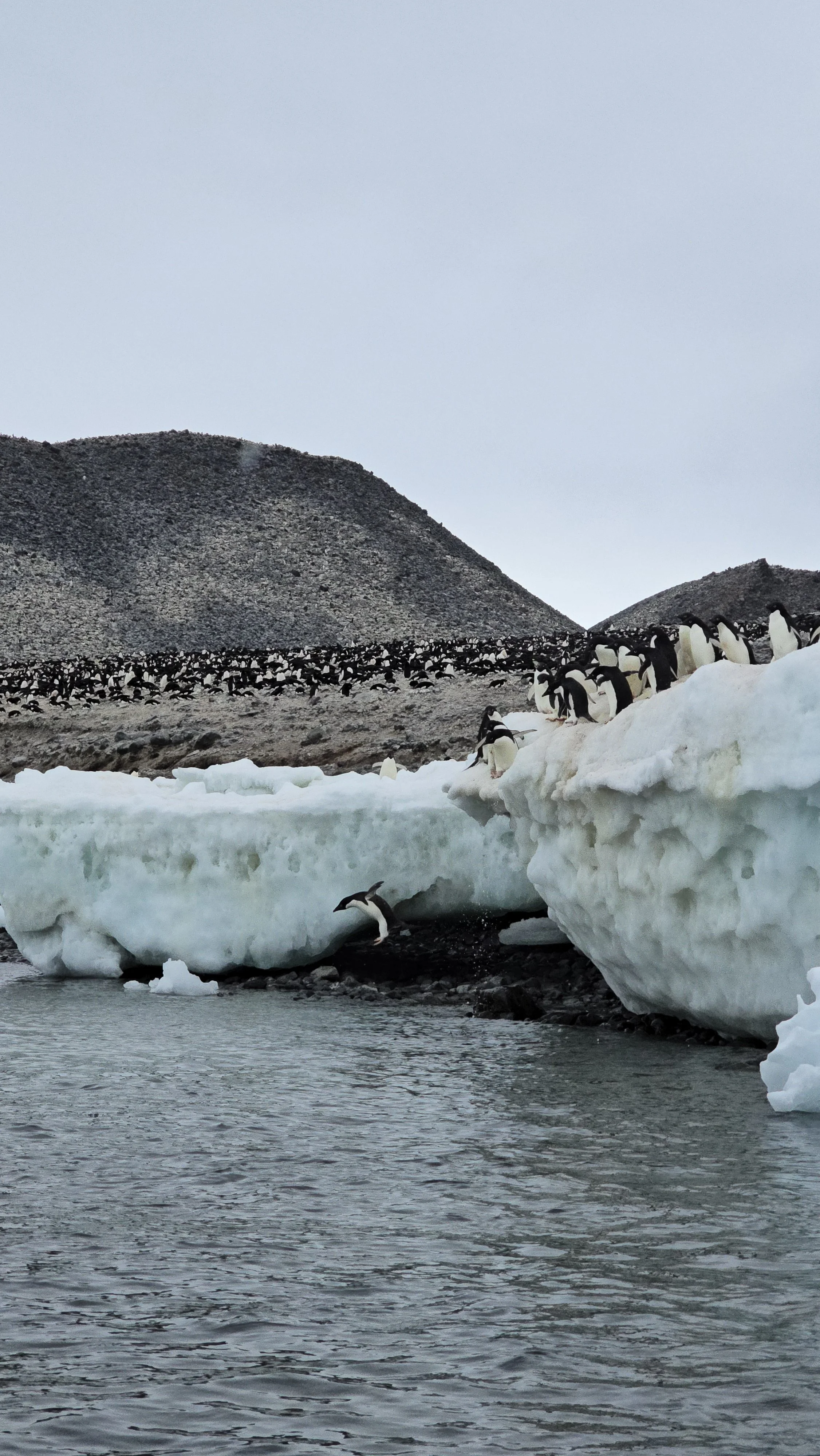
Setting foot on Antarctica is exactly as powerful as it sounds. We watched penguins line up along the cliffs, working up the nerve to jump into the sea. We passed nesting colonies packed with thousands of birds, newly hatched chicks wobbling beside their parents while skuas circled overhead. Antarctic terns called out above us, snow petrels and cape petrels rode the wind, and seals sprawled across ice floes like they owned the place, because in a sense, they do.
And then there were the whales. Surfacing, diving, and blowing spray into the cold air. So close enough to your zodiac at times, to almost hear them breathe.
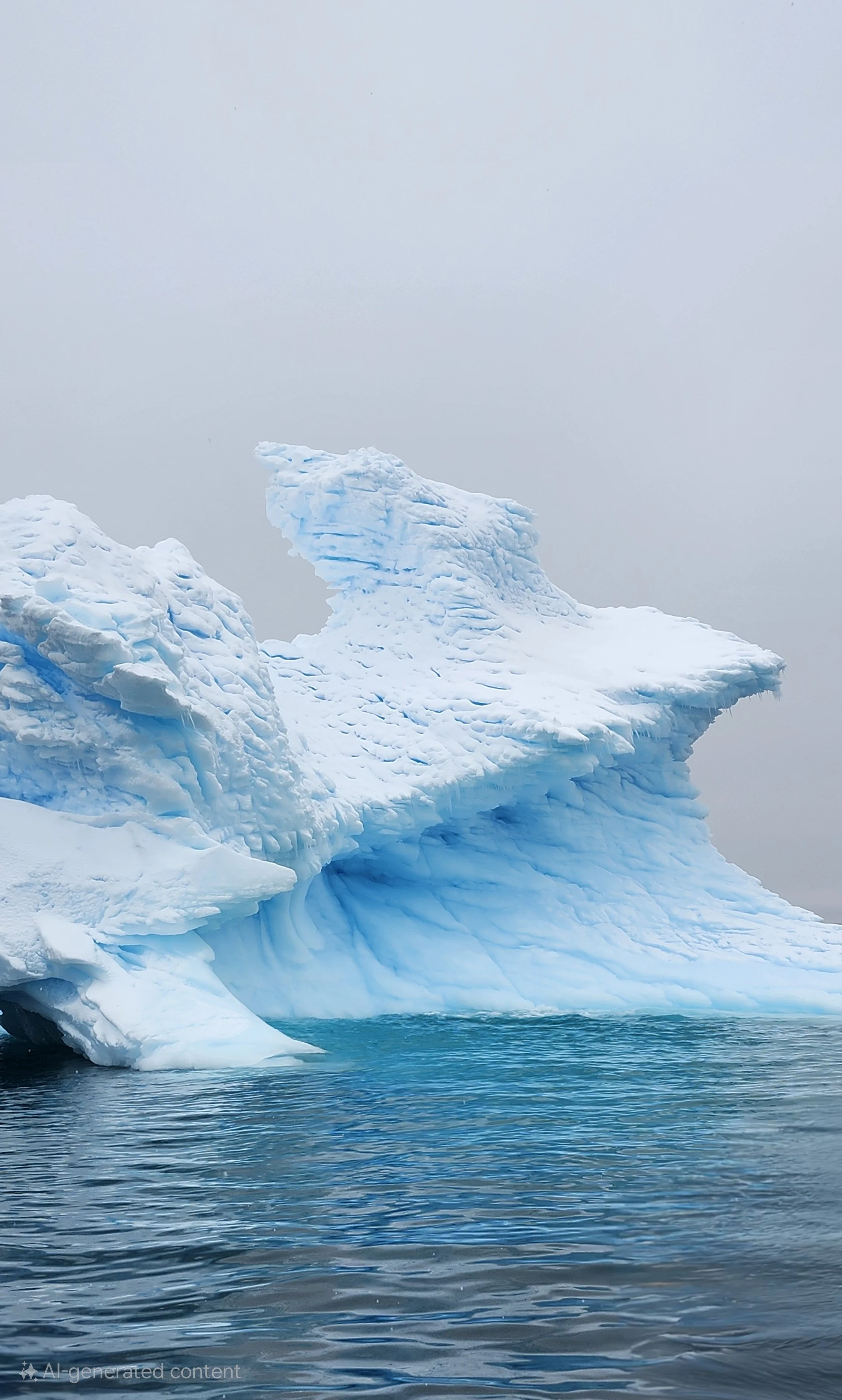
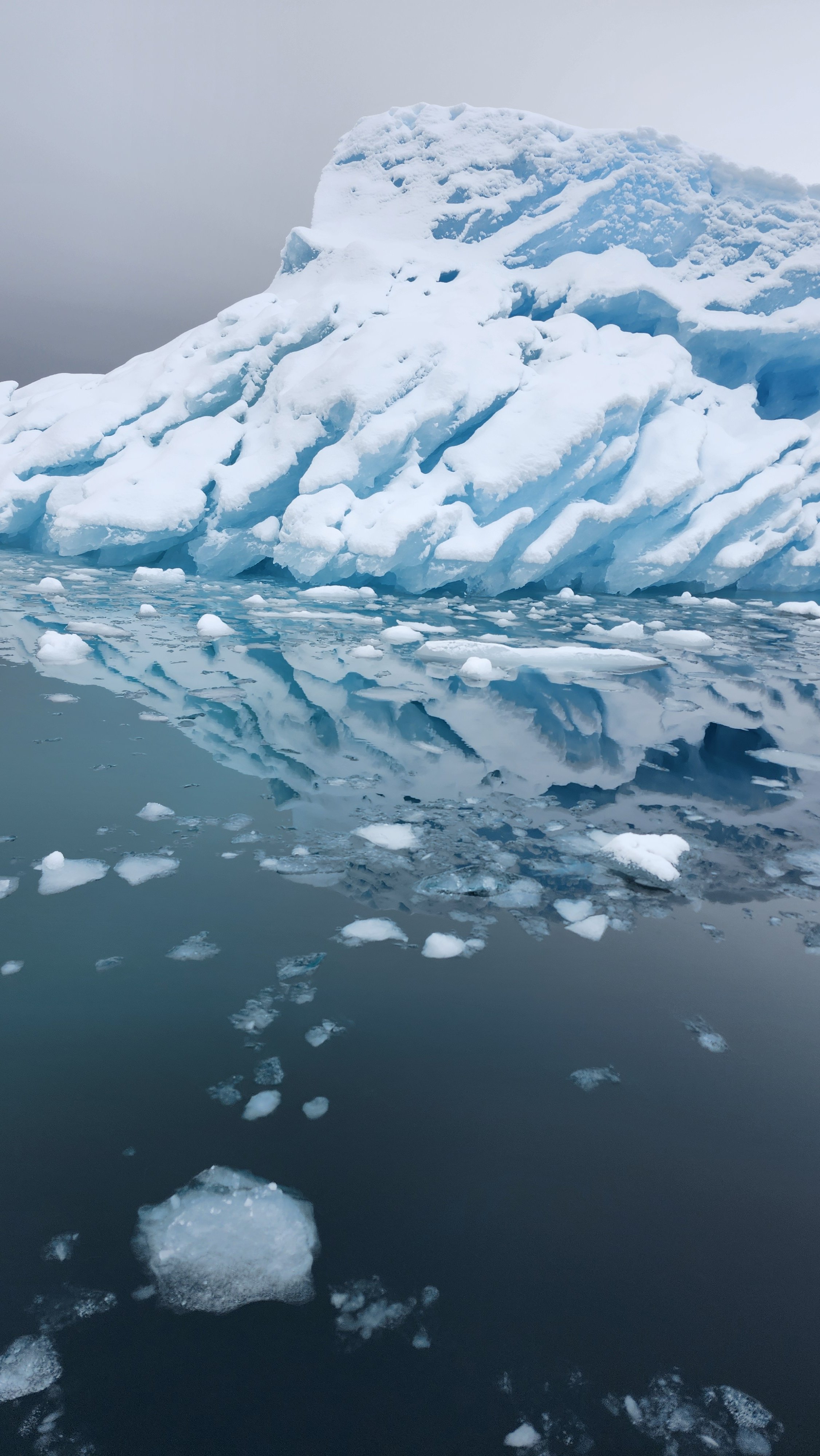
The ice itself deserves its own mention. Every iceberg looked different from the last. Some rose like cathedral spires, others looked like floating castles or wind smoothed sculptures. The color was something I was not prepared for either, shades of blue so vivid that no hex code could recreate them. Electric. Luminous. Genuinely alive.
Each day felt like its own dream sequence, and by the end of the five days, I understood why people describe this place as life changing rather than just beautiful. I have goose bumps even as I type this!
The Ship: Quark Ultramarine
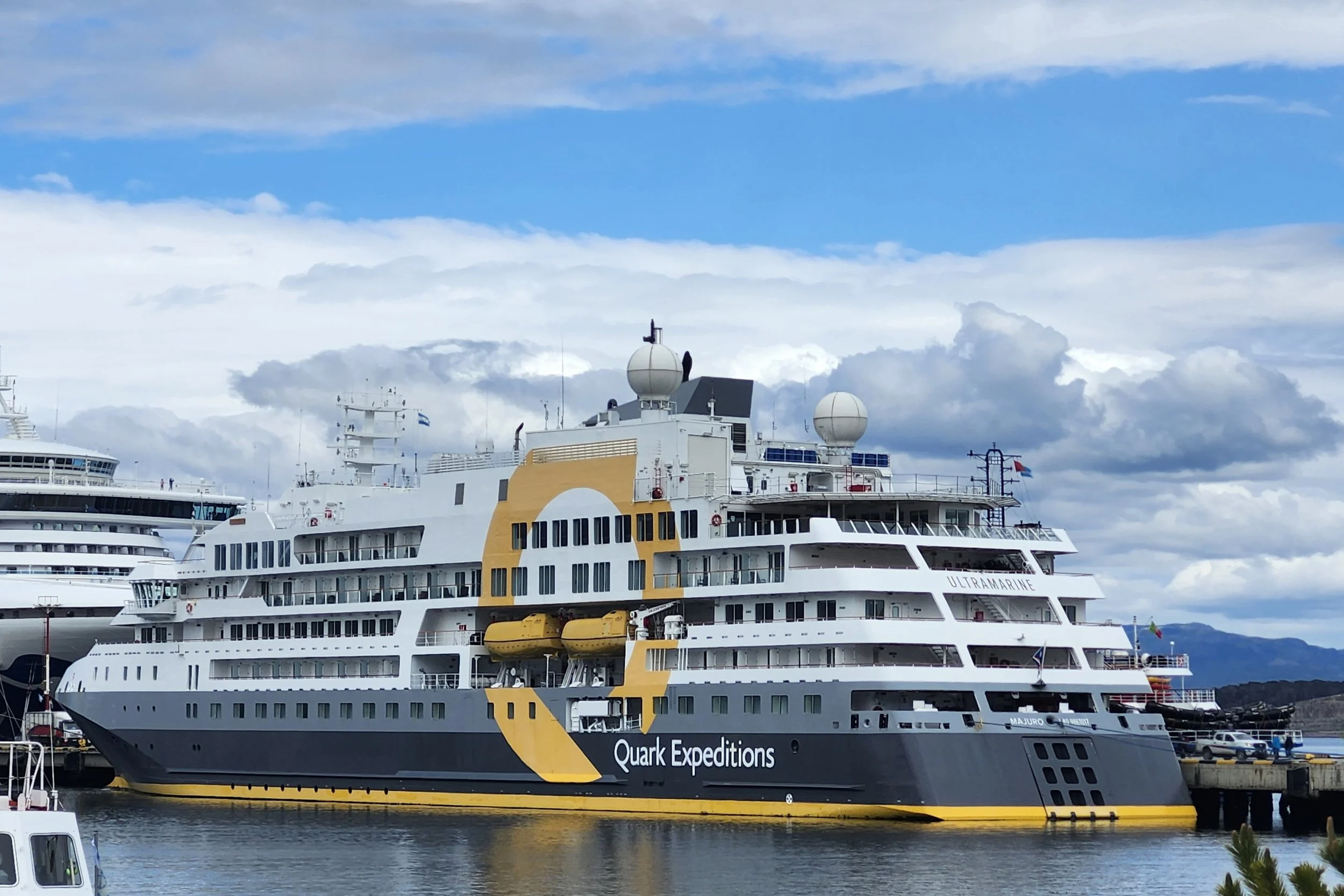
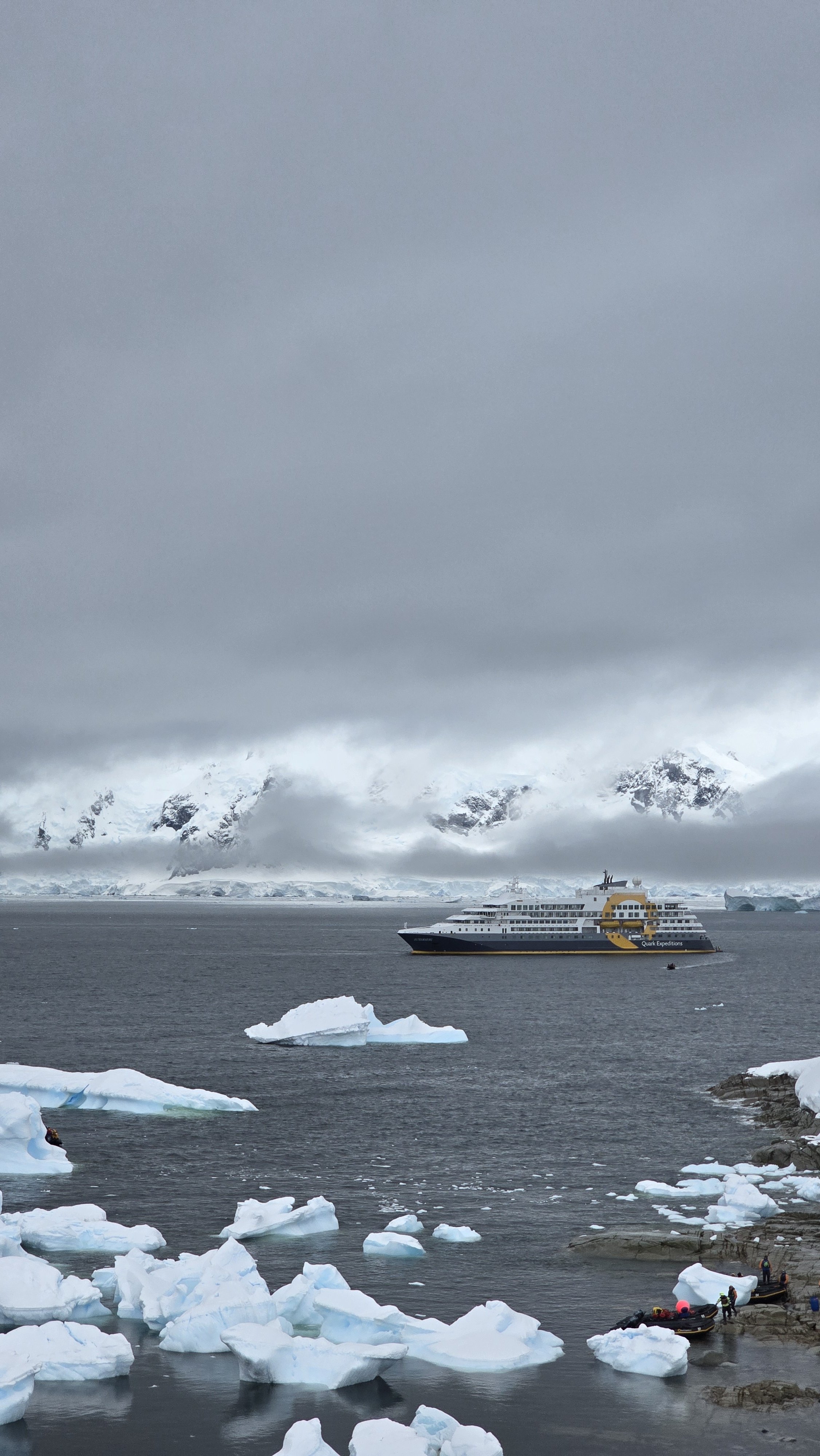
The Ultramarine is purpose built for polar expedition travel. It carries a fleet of zodiacs, a reinforced hull designed for icy waters, and the biggest differentiator - two helicopters onboard, which is not something every expedition ship offers.
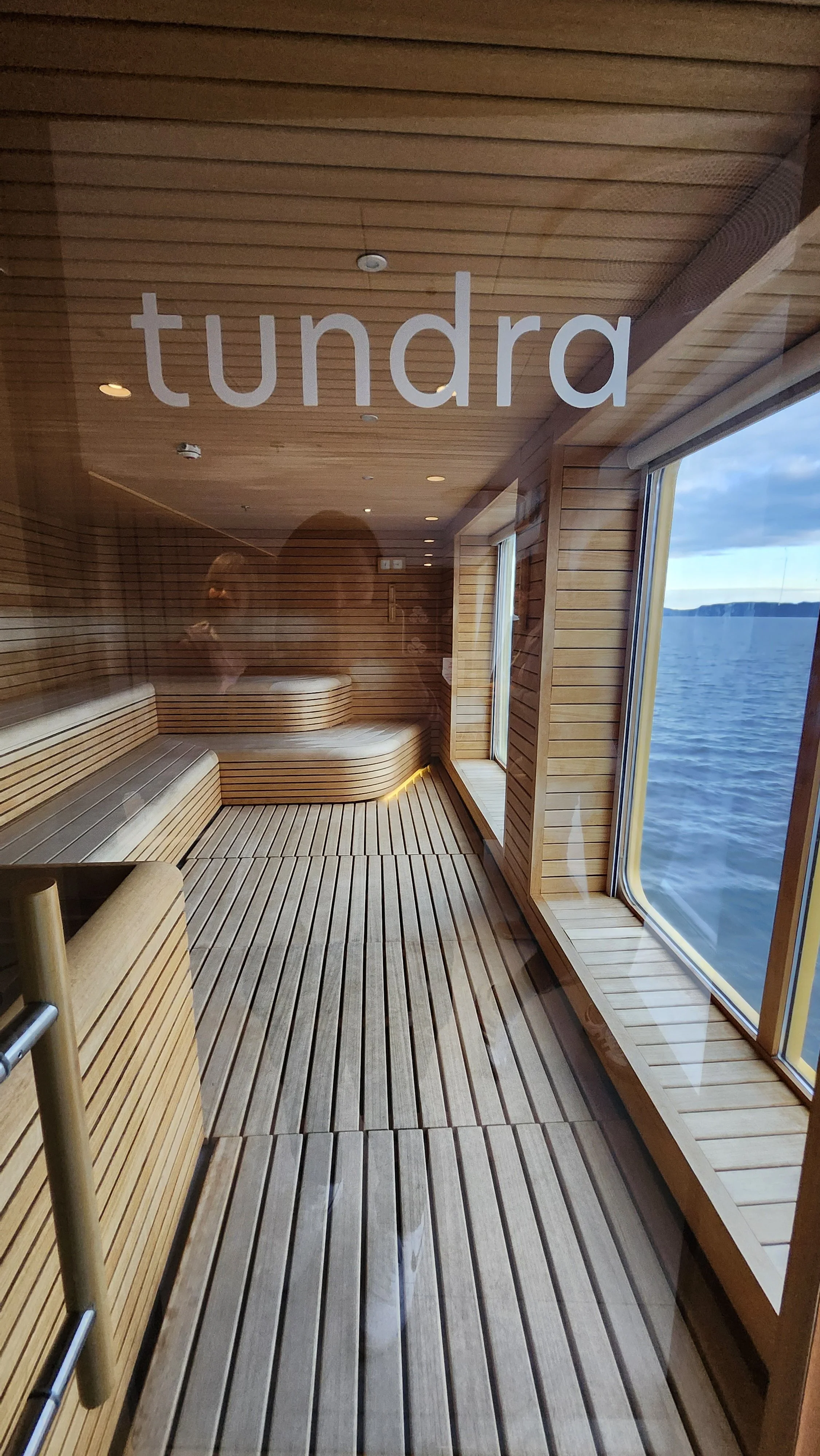
When you are not out exploring, the ship itself gives you plenty to enjoy. The crew runs regular lectures on Antarctic history and wildlife, and there is a sauna, a steam room, and a spa onboard.
Cabins
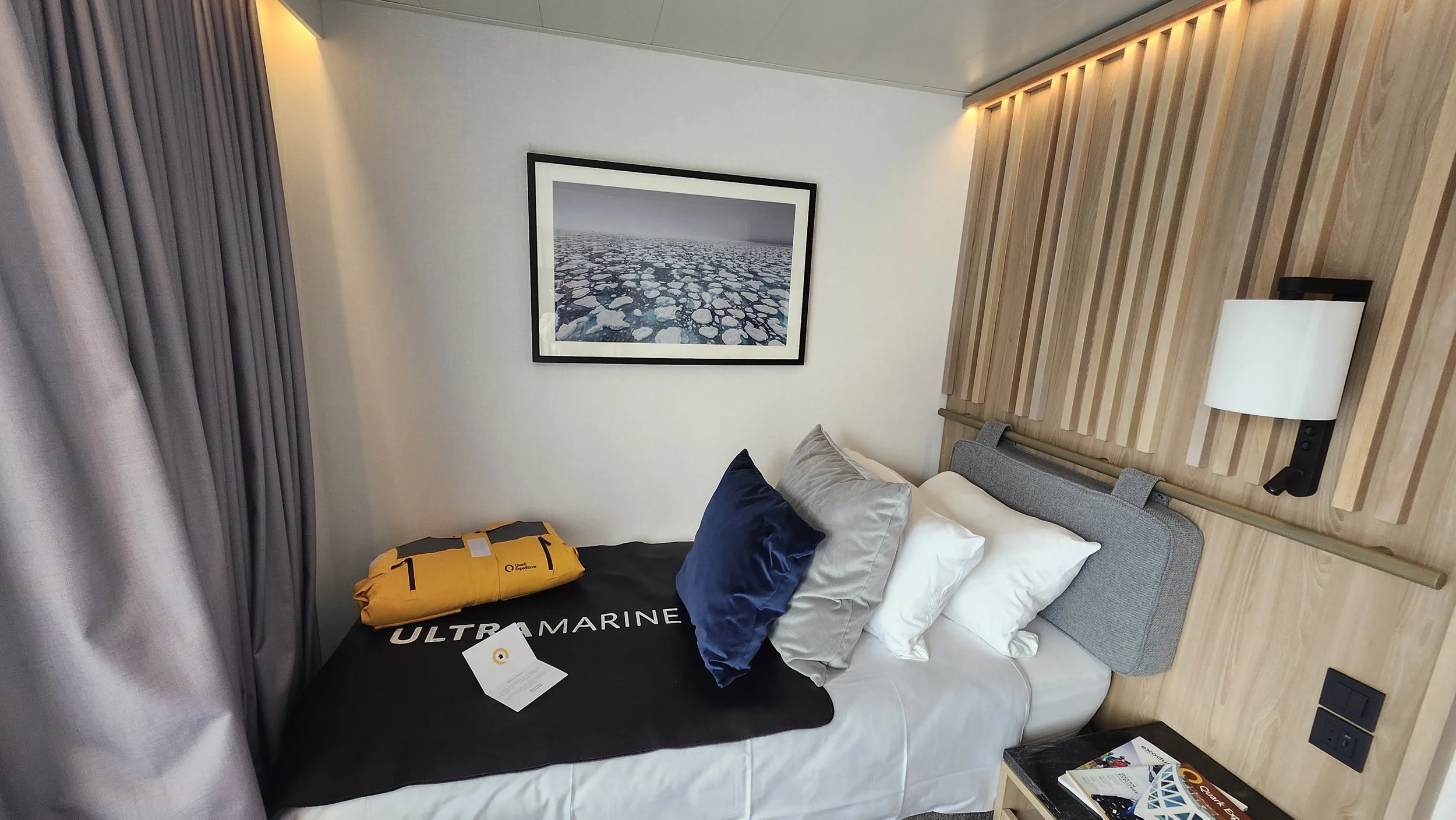
Ultramarine carries 199 guests at most, and doesn't really have a "bad" cabin, which is unusual for an expedition ship. Even the entry-level Explorer cabins get full-size windows, not the sad little portholes you brace yourself for on older polar vessels. I was in a Solo Panorama with floor to ceiling windows. It was the perfect size, cozy without feeling cramped. Waking up to that view every morning made the whole trip feel even more special.
Storage: Plenty of storage and hooks for all of your layers, the parka, shoes and gear (Your boots and waterproof pants can stay in the Ready room)
Comfort: Very soft bed - extremely comfortable. The cabins have blackout curtains that are so important to have, as the sun does not really set out there.
Bathroom: heated floors are standard across the ship, which sounds like a gimmick until you've just come off a wet Zodiac landing and step onto warm tile in bare feet. It is, I'm told, a small miracle of engineering. I would like to speak to whoever approved that budget line.
Windows and views: solo cabins get floor-to-ceiling windows facing out, so even the smallest room on the ship has a front-row seat to whatever iceberg happens to drift by at 6am
Was the solo cabin worth it: Absolutely yes if you value privacy and time to yourself, or if you need your daily dose of naked yoga. (My reason was the former, I promise). But I must mention that there were other solo travelers on the ship that were sharing cabins - Quark had paired them with another solo traveler of the same gender - and even though they had signed up to share a room with a stranger for eleven nights, they ended up having a lot of fun. I know some of them who met this way have become travel buddies!
Food aboard Ultramarine
Here's my honest, slightly food-obsessed take. All meals happen in one restaurant, Balena, on Deck 5, which sounds limiting until you remember you're on a ship whose main event is happening outside the windows, not on the plate. Breakfast and lunch run buffet-style with rotating pop-up stations (a pasta bar shows up more reliably than the sun), and dinner shifts to a proper multi-course, sit-down menu that changes nightly.
If you're a picky eater, the "always available" menu (burgers, steak, salads) is your safety net.
Dietary options: I am Vegetarian and I had plenty options during each meal. A co-traveler had special Halal meals prepared for me, and I found it remarkable because she was the only one with that dietary need on the ship and they still catered to her needs. Taste wise, my vegetarian meals were average. Nothing to write home about. I remember lunch was better than dinner. Also (understandably), the salads - which are a staple for me - got really stale by Day 6. But again, this isn’t a ship that is popular because of it’s culinary excellence.
Drinks included: House wine/beer is included at dinner. Specialty drinks and cocktails cost extra.
Dining atmosphere: communal tables if you want company, smaller tables if you don't.
Public spaces and amenities
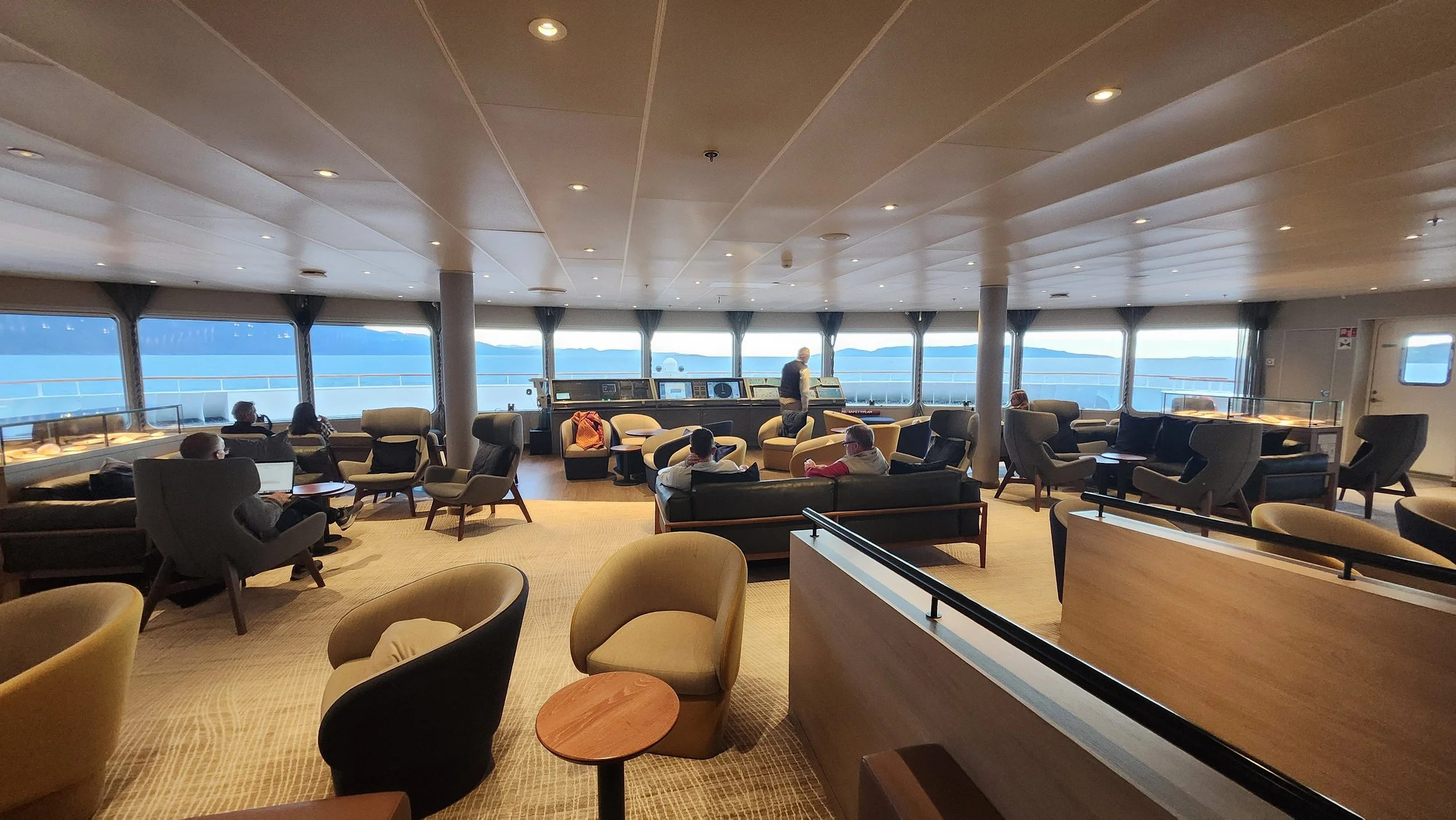
The Panorama Lounge is the social heart of the ship, floor-to-ceiling glass, good for lectures and for nursing a drink while pretending you're not just there for the view. There's a spa, sauna, small gym, and an outdoor observation deck built specifically for wildlife spotting and fast Zodiac launches, this is not a ship optimized for lounging by a pool, mostly because there isn't one. I loved my sauna-with-a-view after an icy zodiac ride. If you have an onboard credit, you can use that to pay for your spa treatments.
The ready room, and the cubby that changes everything
This might be the most underrated feature on the entire ship. Each guest gets their own assigned cubby in the “Ready room” on Deck 2 from where zodiacs are deployed. You store boots and outer waterproof pants here between excursions. That sounds minor until you think through the alternative - hauling wet, mud- and guano-streaked gear back to your cabin after every single landing, then figuring out where to dry it, then doing it again a few hours later. The cubby system means your boots and pants live in the ready room for the whole voyage, not in your cabin, which keeps your actual living space clean, dry, and smelling like a cabin instead of a tide pool. It is a genuinely big deal and one of those details that only becomes obvious in hindsight, once you realize how many ships don't bother.
Worth mentioning that all Quark ships have a Ready Room.
A small aside: what I bought with my onboard credit
Quick, fun detour before we get back to the practical stuff. That onboard credit from Fora's Virtuoso partnership didn't sit unused. I walked out of the Polar Boutique (the ship’s store) with a Lululemon Antarctica-edition zip-up and a pair of Bollé sunglasses, both of which I now wear constantly. The zip up is a converstion starter - ofcourse I like to flex that "I have been to seventh continent". Consider this your reminder that the boutique is worth a browse even if you think you packed everything, and that the credit is real money, not a gesture.
Expedition Team and Service
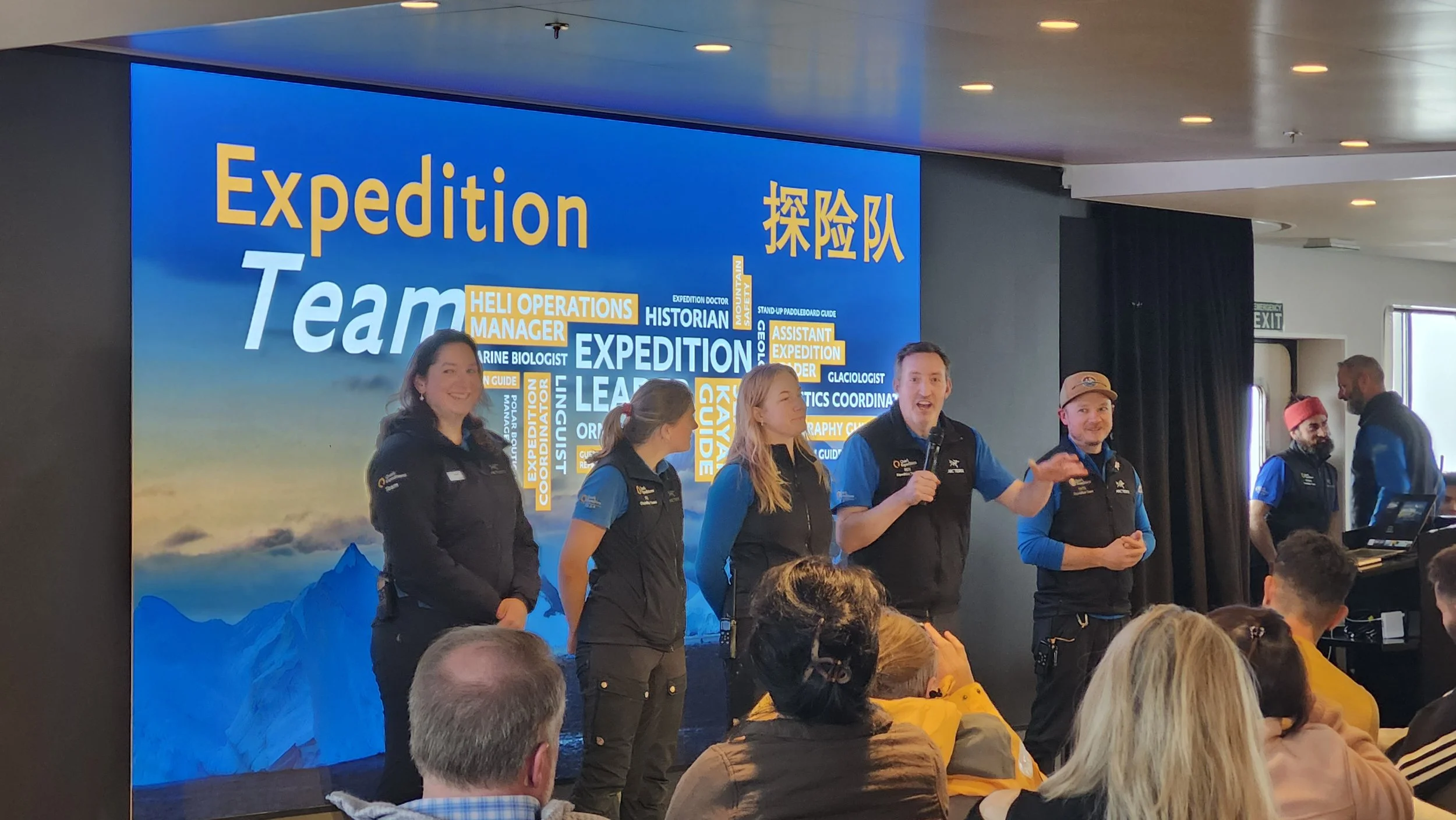
On an expedition ship, the guides are the product as much as the ship is. From what I experienced and what echoes across other traveler reviews, the team on Ultramarine tends to be genuinely seasoned, a lot of guides carry a decade or more of polar experience between them, and it shows in how calmly they read weather, ice, and wildlife behavior.
How approachable the team felt: They rotated through meals and sat with us, which I appreciated, since it turns lunch into an actual resource rather than just a meal. I'd describe the vibe as professional and friendly rather than instantly best-friends-on-day-one warm, which honestly suits the job. These are people managing weather calls, wildlife safety, and two hundred guests' expectations at the same time, so a bit of polish over pure gush felt appropriate rather than distant.
Group size: Ultramarine can take 199 guests, but my sailing ran closer to 170, which in practice meant shorter waits at every stage and a slightly more spacious feel throughout the ship, at meals, in the lounge, on the Zodiacs themselves.
Zodiac organization: The mechanics help here too, the Zodiacs live in an internal hangar down on Deck 2 at water level, with four embarkation points spread across port, starboard, and stern, so there's no single gangway everyone funnels through. But the real quality-of-life detail is how boarding is run day to day. The whole ship gets split into four groups for excursions, and you don't go anywhere until your group is called over the announcement system. No standing around in full gear sweating by the door waiting your turn, and no queue once you're called. You hear your group, you head down to the Ready room on Deck 2 , change to your boots, your outer pants and life jacket. You're on a Zodiac within minutes. There is genuinely no waiting to get off the ship, which sounds like a small logistics detail until you've lived the alternative on a less organized ship, and then it becomes one of the best things about the whole operation.
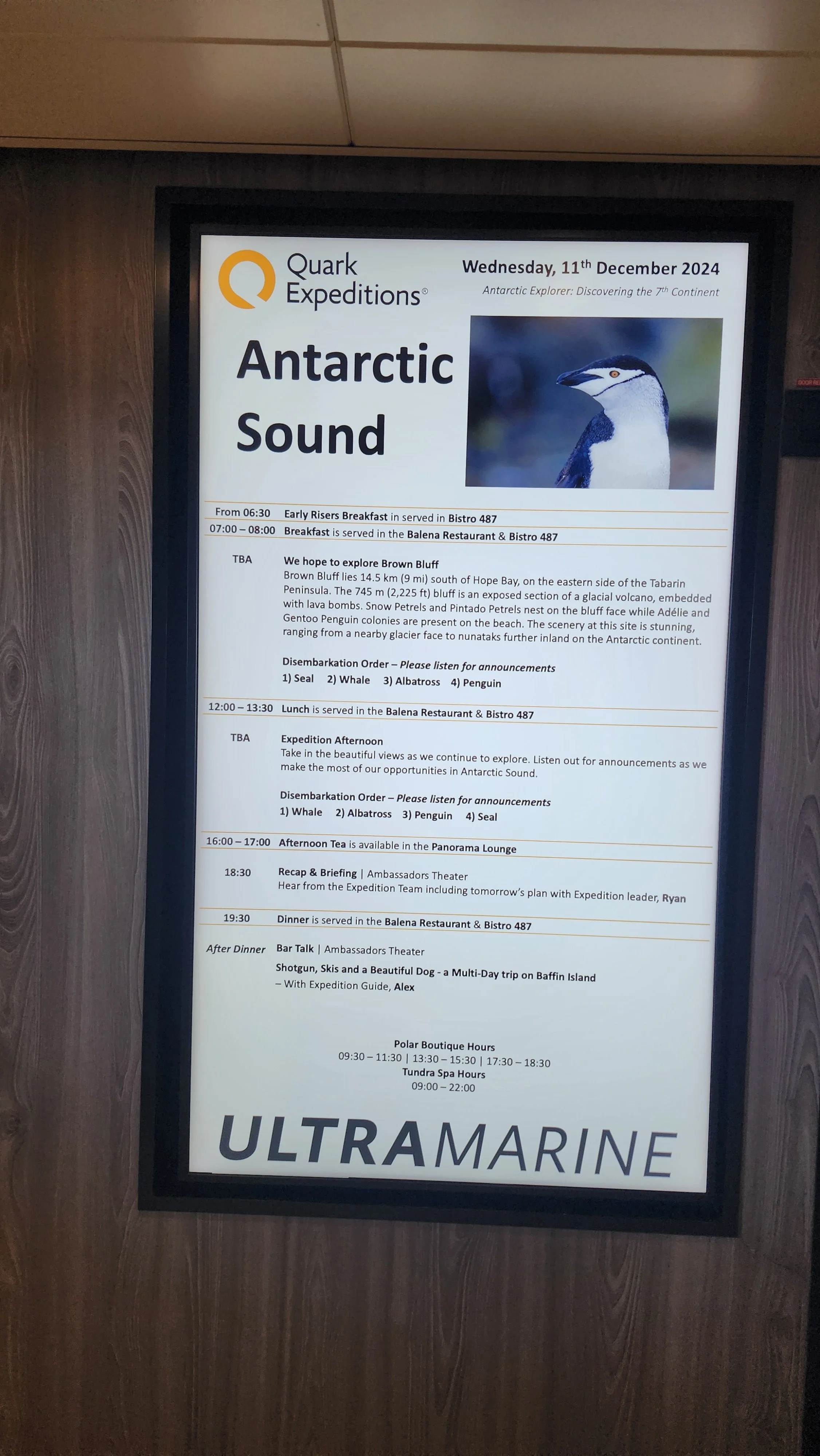
Briefings: Every evening followed the same reassuring rhythm. First, a recap of the day that was, often with the expedition leader narrating highlights you might have missed if you were on the other side of the ship during a landing. Then the plan for tomorrow. Then a genuinely useful weather and ice outlook, wind, sea state, what it might mean for the next day's landings, delivered honestly rather than glossed over. After dinner, there was usually a short presentation from a member of the crew, sometimes educational, a naturalist walking through whale behavior or glaciology, sometimes just a good anecdote pulled from someone's years in the polar world. It gave each day a shape, and it meant nobody was ever guessing what came next, which matters more than you'd think when the actual plan can still shift with the weather by morning.
Is the Ultramarine worth it?
Ultramarine is a strong choice for:
Active travelers who want to fill every day with something physical
Couples and families who want an expedition-first trip without giving up real comfort
First-time Antarctica visitors who want a wide range of excursion options in one trip
Anyone drawn specifically to helicopter flightseeing
People who want comfort without a stiff, formal luxury-cruise atmosphere
Solo travelers - you have both sharing and no-sharing options
Consider another ship if:
You want a smaller, more intimate vessel
Fine dining and white-glove service are non-negotiable for you
You want a fly-the-Drake itinerary rather than sailing it both ways
Budget is your primary driver
Consider Ultramarine, but a different itinerary, if:
One fifteen-minute helicopter flight isn't going to be enough for you. On my voyage, flightseeing was a single excursion, spectacular but brief, and it ate the rest of that day's schedule. If the helicopter is the actual reason you're booking Quark rather than a nice bonus on top of a Zodiac-led trip, look at Quark's dedicated Antarctica by Helicopter itineraries instead, which offers multiple flights and, on some departures, an actual helicopter landing. There are two itineraries as of May 2026 - Antarctica by Helicopter: Icebergs, Mountains and Remote Lands (12 days) and Antarctica by Helicopter: Crossing the Circle and the Peninsula (14 days). If flightseeing is a nice-to-have rather than the whole point, the standard Ultramarine Peninsula voyage I sailed is still the better value. If it's the main event, one of these two will serve you far better than mine did.
What could have been better
Here is what I genuinely wish had been better
Wi-fi: it's basic, and I mean that literally. You can send texts, but attachments and photos would not go out, even when I tried repeatedly. If you're expecting to post real-time updates or send photos home mid-voyage, set that expectation to zero before you leave. You do have the option to purchase an upgraded wi-fi package onboard.
Helicopter tour length: fifteen minutes is not enough. It's a genuinely spectacular fifteen minutes, but it ends just as you're settling into it.
The Opportunity cost of the Helicopter tour: The day we flew, we didn't do any other Zodiac landings. The helicopter effectively became the entire day's activity rather than an addition to it, which is worth knowing going in.
What I packed for my Antarctica Expedition
Even during Antarctica's summer season, temperatures hover around the low 30s Fahrenheit, or around 0 Celsius. Most expedition companies, including Quark, provide a parka to keep and boots to borrow, which cuts down significantly on what you need to bring yourself.
Here is what I brought with me
[This one is mandatory] Waterproof pants - I got the ones that have a zipper at the bottom, as I wanted them to go over my boots
Thermal base layers, a couple of mid layers (hoodies/quarter zips), a couple of leggings and pants
A pair of sneakers for onboard use (the ones I used on the flight from home were fine)
Warm gloves with the tech finger & warm calf length socks
A beanie, a balaclava, a neck warmer. Just one of them would do, but I liked to rotate through them and they offer different levels of warmth.
Polarised sunglasses
Insulated coffee mug
A multi outlet power bank - Ships have fewer power outlets than we are used to at home. I charged my power bank when I was not in the cabin, and came back to a fully charged bank that can charge multiple devices.
Packed but ended up not using
Hats, scarves, or small accessories that can easily blow away. I realized I may lose them, but more importantly, they could land in the water and pollute Antarctica’s fragile environment.
The coat or heavy outerwear I brought was never used. Quark’s parka is really two coats - an light weight puffer and the outer yellow parka you’ve seen in pictures. On some landings, I used both. On some, it was warm enough that I was able to skip the puffer and wear just the parka.
Binoculars - the ship had a few pairs to borrow and I need not really have packed mine. But if you have space in your bags, throw them in.
Forgot to pack, and still furious about it!
My Rayban Meta Sunglasses!! They would have come incredibly useful for hands free recording, and during the helicopter ride when we were not allowed to use any recording devices while boarding.
Why I went in December
I'll give you the easy answer before the intelligent one. I picked December because the dates worked for my own calendar - period. I was traveling solo, and I wanted to be back home with family before the holidays. That said, December turned out to be a genuinely good accident. It's high summer, so the days stretch long and the temperatures are about as mild as Antarctica gets. Colonies are at their loudest and busiest, nest building and incubation in full swing, with the first chicks of the season starting to appear depending on the site. If you're after the classic, postcard version of Antarctica, the one you've seen in every documentary, December delivers it reliably.
The one honest tradeoff: whales were around, we saw some every day, but they were not half as playful as they get later in the season. If whale encounters are the main reason you're going, that's more of a February or March thing. I made peace with that trade - because you can see whales breaching in plenty of places around the world, but you cannot see ice and penguins at that scale anywhere else on earth. December gave me the trip I actually wanted - penguins, ice, long light, and a flight home with time to spare before the holidays, but it's worth knowing what it isn't before you pick your own month. If you need a quick guide -
November is for Ice: dramatic ice formations and pristine, untouched landscapes
December and January are for Penguins: a strong balance of scenery and wildlife activity, including newly hatched penguin chicks.
February and March are for Whales: Best whale sightings of the season and cheaper prices.
If you are sailing the Drake passage like I did, it does not matter what month you go. The Drake can shake or be a calm lake whenever it wants to be. However, if you are considering a Fly-the-Drake itinerary where you can fly one way or both ways into Antarctica , then try and avoid early November and March, when the weather tends to be a bit more unpredictable and can affect your flight schedule. Read my detailed blog on How to choose an Antarctica expedition for more.
Final Thoughts on My Antarctica Trip
I am deeply grateful to have experienced something so few people in this world ever get to see. Antarctica has a way of putting things in perspective. It made me realize how small we are, how powerful nature is, and how resilient life can be, even in the harshest conditions on the planet.
For me, Quark, The Ultramarine, the solo cabin, December - all of these were the right decisions. I knew I wanted a solo cabin, since I was traveling on my own and did not want to compromise on that. And if I am being honest, I am also a sucker for helicopters, and the idea of flying over the Antarctic Peninsula rather than only viewing it from the water was something I could not pass up. The Ultramarine gave me both, and looking back, that combination shaped the entire feel of the trip.
Frequently Asked Questions
-
Yes. Quark is a polar specialist that only runs Arctic and Antarctic voyages, and that focus shows in how confidently the expedition team handles weather, wildlife, and logistics. Ultramarine in particular stands out for its twin helicopters, fast Zodiac deployment, and a genuinely seasoned expedition team. It's not the right fit if traditional cruise-ship luxury or nightly entertainment is what you're after, but for an active, well-run expedition, it delivers.
-
Yes, based on my own trip. This is not a budget option, but the helicopter flightseeing alone justified the cost for me, even at just fifteen minutes in the air. Add in the expedition leader's ability to find uncrowded landing spots, the fast, well-organized Zodiac system, and cabins that are unusually comfortable for an expedition ship, and the price reflects a genuinely well-run operation rather than just a premium label.
-
Because the tradeoffs actually favor Ultramarine for most travelers, not just its guest count. A larger, purpose-built ship like this one handles the open ocean and ice more smoothly, better stabilizers mean a more comfortable Drake crossing than you'd typically get on a smaller vessel. It also has the space to carry two helicopters, a proper spa and sauna, bigger cabins, and a Zodiac operation fast enough that the extra passengers never really translate into extra waiting. A 60-passenger ship wins on intimacy, but Ultramarine wins on comfort, stability, and the sheer range of what's onboard, and for most first-time expedition travelers, that trade is worth making.
-
No, honestly, it doesn't. Between the four-group Zodiac system, four embarkation points, I never felt like I was competing with a crowd for space, a landing, or a moment with the wildlife. That said, I won't pretend it feels as intimate as one of the smaller 60-passenger ships you'll see other operators run, this is a bigger, more social ship by design, and if what you want is a tiny, everybody-knows-everybody voyage, Ultramarine isn't built for that.
-
A typical Quark Ultramarine voyage to Antarctica looks like this -
Day 1 is arrival in Buenos Aires.
Day 2, you fly to Ushuaia and board the ship.
Days 3 and 4 are spent crossing the Drake Passage south, filled with lectures and gear prep, and you typically arrive at the Peninsula later in the day on Day 4.
Days 5 through 9 are the heart of the trip, spent exploring the Antarctic Peninsula with Zodiac cruises, landings, and wildlife viewing once or twice a day depending on conditions.
Days 10 and 11 cover the return crossing of the Drake Passage back to Ushuaia.
Day 12, you disembark, fly back to Buenos Aires, and the journey wraps up.
-
A Quark Ultramarine expedition typically includes your pre-voyage hotel night in Buenos Aires, the charter flight to Ushuaia, all meals onboard, a parka to keep, boots to borrow, one included helicopter flightseeing flight, and daily Zodiac excursions and landings. Optional extras like sea kayaking, paddling, specialty drinks, and upgraded wifi cost more
-
Yes, one flightseeing flight is included free on every Antarctica itinerary Ultramarine runs, so it's built into the fare rather than something you have to add on or gamble on at booking. A helicopter landing, however, is different and only available on select itineraries, like Quark's dedicated Antarctica by Helicopter departures, so check that specifically if setting foot on the continent by air matters to you.
-
Yes. Ultramarine offers dedicated Solo Panorama cabins with floor-to-ceiling windows and no single supplement, which is what I booked. Quark also offers a shared option for solo travelers who don't mind rooming with another solo guest of the same gender, paired by the company, so there's flexibility depending on whether you want privacy or company.
-
Not in the traditional sense. There's real comfort here, heated bathroom floors, spacious cabins, a sauna and spa, but the ship is built around the expedition rather than around fine dining or white-glove service. If refined multi-venue dining and formal service are non-negotiable for you, an operator like Silversea will be a better fit than Quark.
-
It varies, and no ship or month guarantees a calm crossing. On my own voyage, sailing south was the "Drake Lake," smooth and easy, while the return crossing had a bit of a shake. I get motion sick easily and needed Dramamine for the return, but managed fine with it. If you're prone to seasickness, pack medication before you go regardless of when you're sailing.
-
Yes, depending on mobility and fitness level. Zodiac landings involve some balance and mobility to get in and out of the boats, and shore excursions can include uneven, icy terrain. That said, the ship itself is comfortable, with an elevator, heated cabins, and a well-organized boarding system that minimizes standing around. If mobility is a concern, talk to me and we will figure out if this is the right ship for you.
-
Ultramarine's biggest differentiator is its two twin-engine helicopters, which operate in parallel and aren't available on Quark's other vessels. It also carries up to 199 guests, larger than some of Quark's other ships, and has a fast Zodiac deployment system built around an internal hangar and four embarkation points. If helicopter flightseeing is a priority, Ultramarine is the ship in Quark's fleet built specifically for that.
How I approach Antarctica for clients
Experiencing this firsthand changed how I plan Antarctica trips for my own clients. It is one thing to read about the difference between ships or itineraries. It is another to have stood on the Ultramarine's deck yourself, flown in its helicopters, and felt what an eleven day expedition actually demands of you. That firsthand knowledge is what I bring to every trip I plan, whether someone is deciding between operators, choosing cabin categories, or trying to figure out the right length of expedition for their fitness level and travel style.
Every client is different, and Antarctica is not a one size fits all destination. Some travelers want the most active itinerary possible, with kayaking, hiking, and every landing they can fit in. Others want a more relaxed pace, with time to enjoy the ship's lounges and let the scenery do the work. Some are drawn to the extra reach of a helicopter equipped ship like the Ultramarine, while others are working within a different budget or timeline that points toward a different operator entirely. Part of my job is asking the right questions upfront so I can match you to the ship and itinerary that actually fits how you want to experience the continent, not just the most popular option.
If you are still in the research phase and want a broader look at the options out there, and how to choose, I put together a full Antarctica expedition guide to help you select the right ship and the right itinerary.
Writer Bio
I'm Dee, a travel advisor with Fora Travel, specializing in adventure and polar expeditions. I'm certified with National Geographic Lindblad Expeditions (LEXpert) and recognized as a Polar Pro with Quark Expeditions, so my clients get firsthand expedition knowledge. I've traveled to all seven continents and bring two decades of corporate leadership experience to planning journeys that feel seamless, intentional, and unforgettable. Ready to plan your own expedition but unsure how to go about it? I compare expedition operators, ship sizes, pricing, activity options and cabin categories based on your priorities. Tell me what matters most to you, and I’ll help narrow the choices. Fill out this form below and I would love to chat!