
Dancing with Fire: Flying over a live volcano eruption
When life hands you lemons, you make lemonade.
When it hands you a volcanic eruption, you go see it up close.
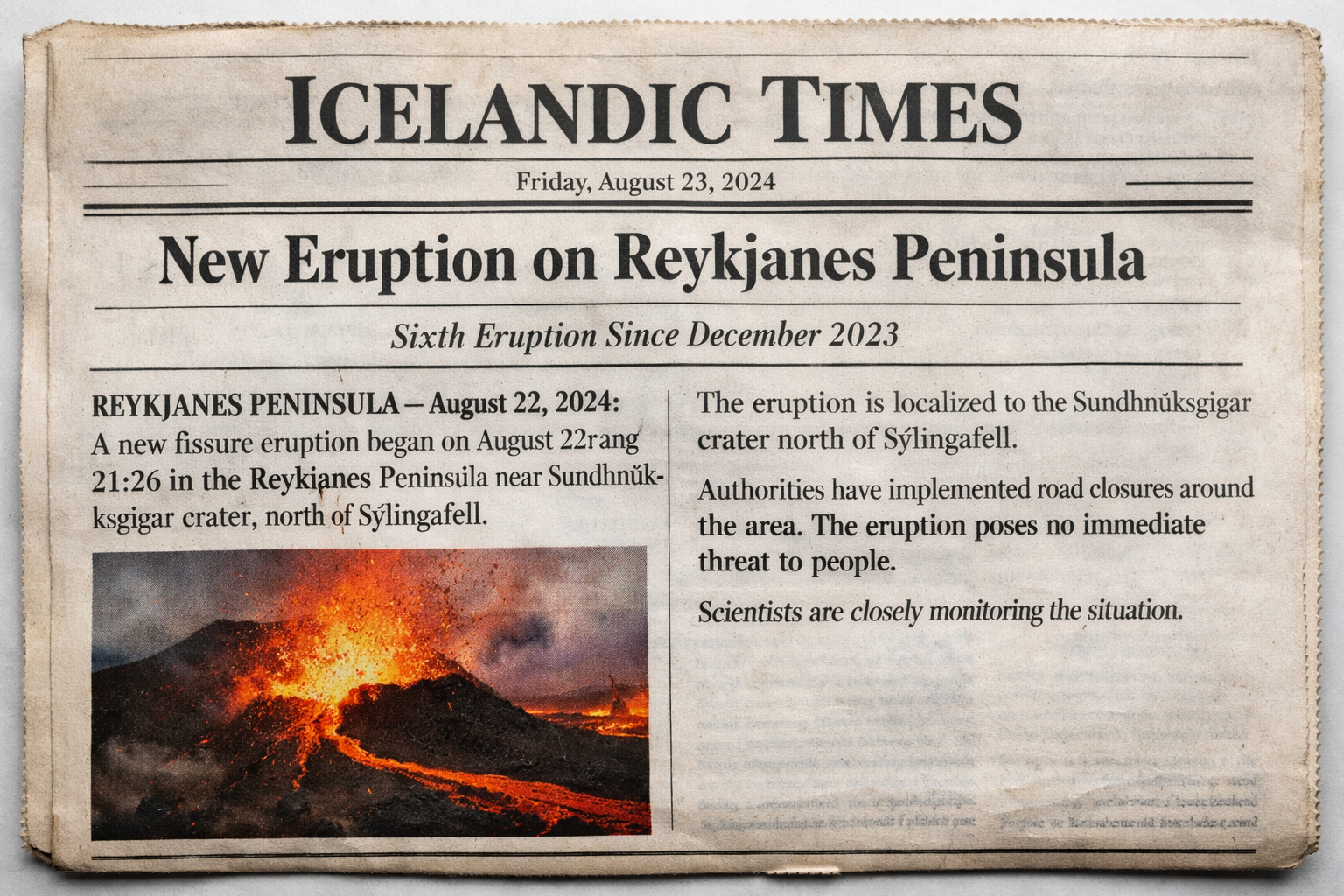
I landed in Iceland on August 21, 2024 for a solo getaway.
The very next day, August 22, the earth cracked open. That is not poetic exaggeration. It is exactly what happened!
The eruption began on the Reykjanes Peninsula, a region in southwest Iceland that has quietly carried a restless geological heartbeat for centuries. Reykjanes sits directly on the Mid-Atlantic Ridge, where the North American and Eurasian tectonic plates slowly pull apart. For hundreds of years the area lay relatively quiet, until 2021, when a series of eruptions began after an 800-year pause. Locals started calling them “tourist eruptions” because, unlike explosive volcanic disasters, these were mostly fissure eruptions. Lava flowed dramatically but predictably, allowing scientists, photographers, and travelers to witness nature in motion from a relatively safe distance.
When I heard about the eruption, I knew this was not something to watch from afar. I booked a helicopter ride for the day after. It felt impulsive and wildly intentional at the same time. I wasn’t going to miss seeing earth’s raw mechanics from up in the air!
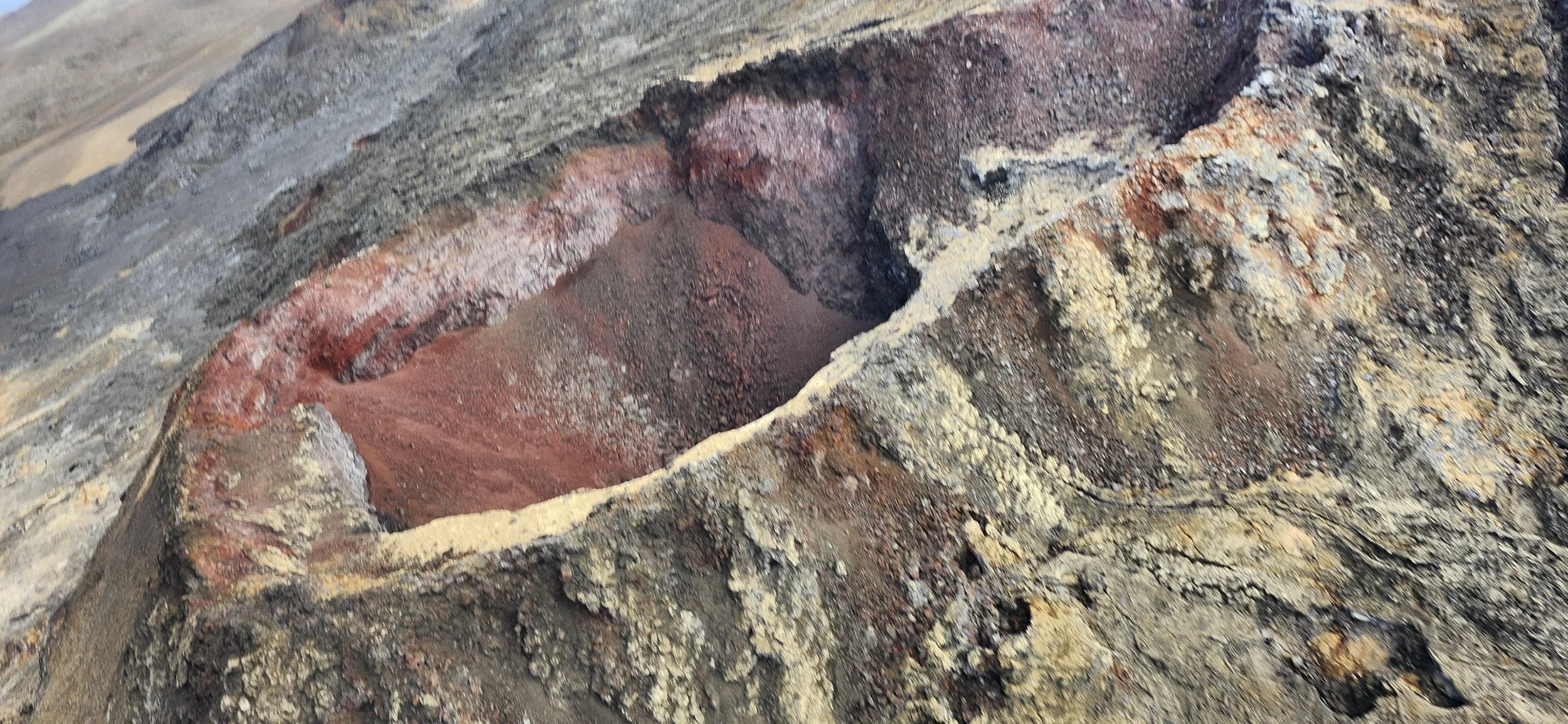
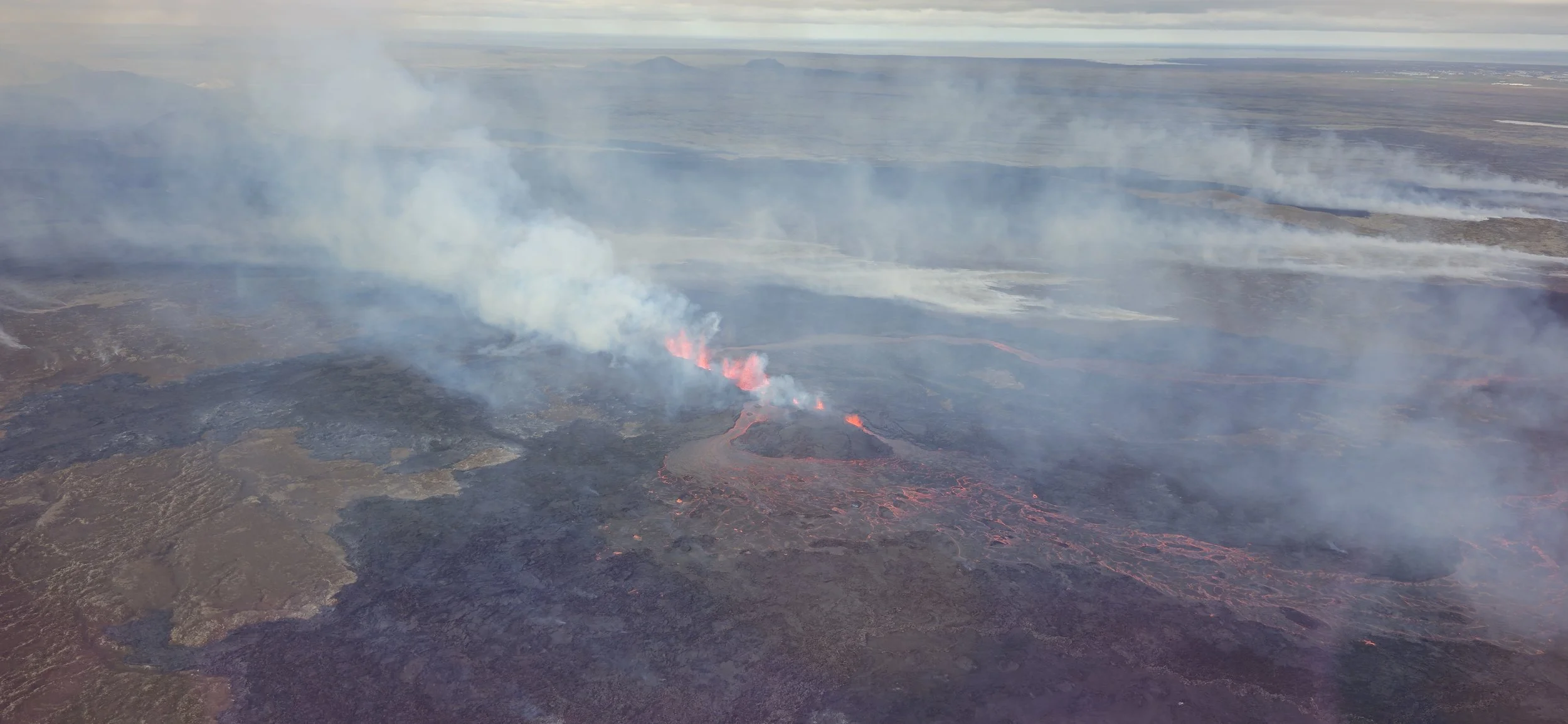
The helicopter lifted off from Reykjavik, and flew towards the eruption area. The smoke was visible from a distance, but the closer we got, the more the colors intensified. Red ash stained the ground like powdered rust and molten lava pulsed and spewed rhythmic bursts, like fountains of fire! The blazing orange was almost too vivid to process. No filter could improve it. No photograph could truly capture it. I can assure you that the pictures I took do not do any justice to reality!
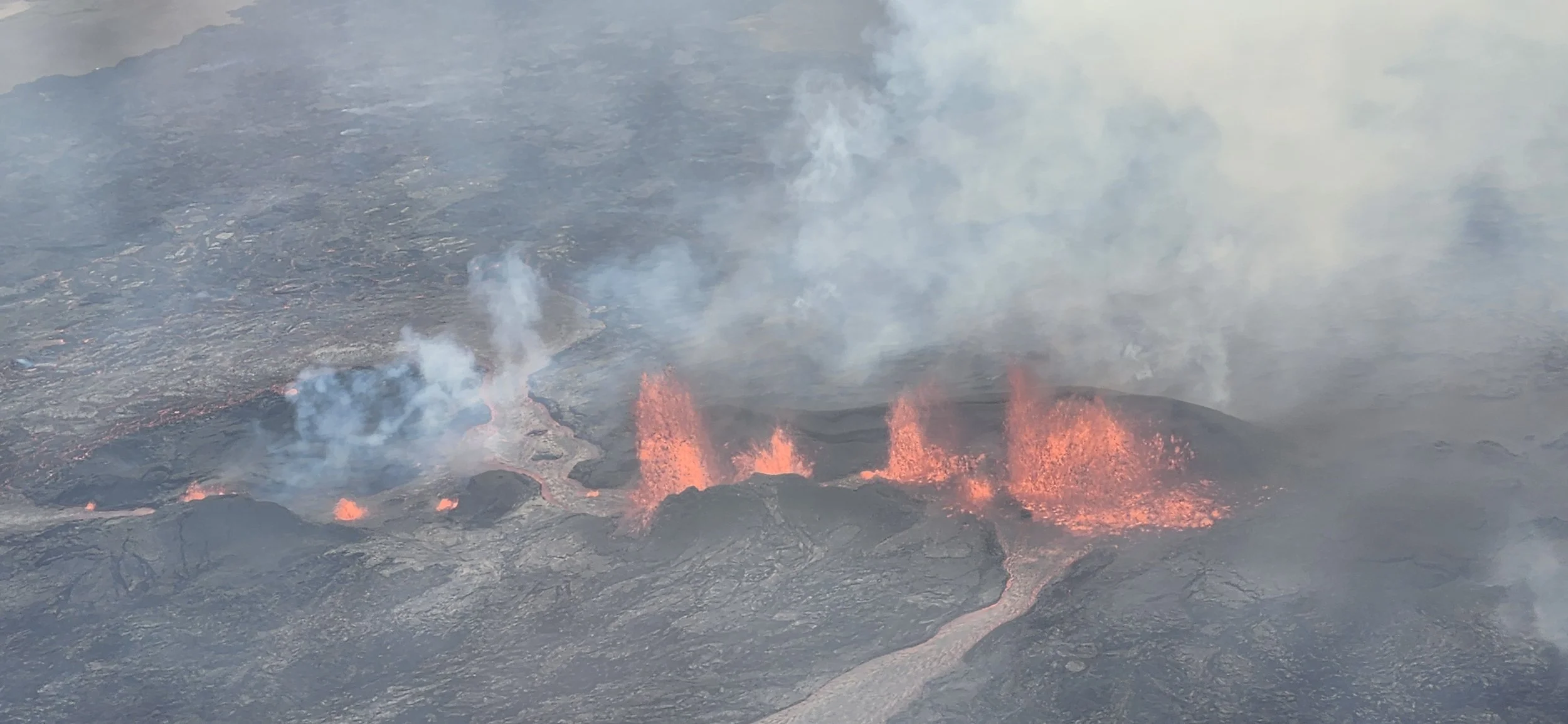
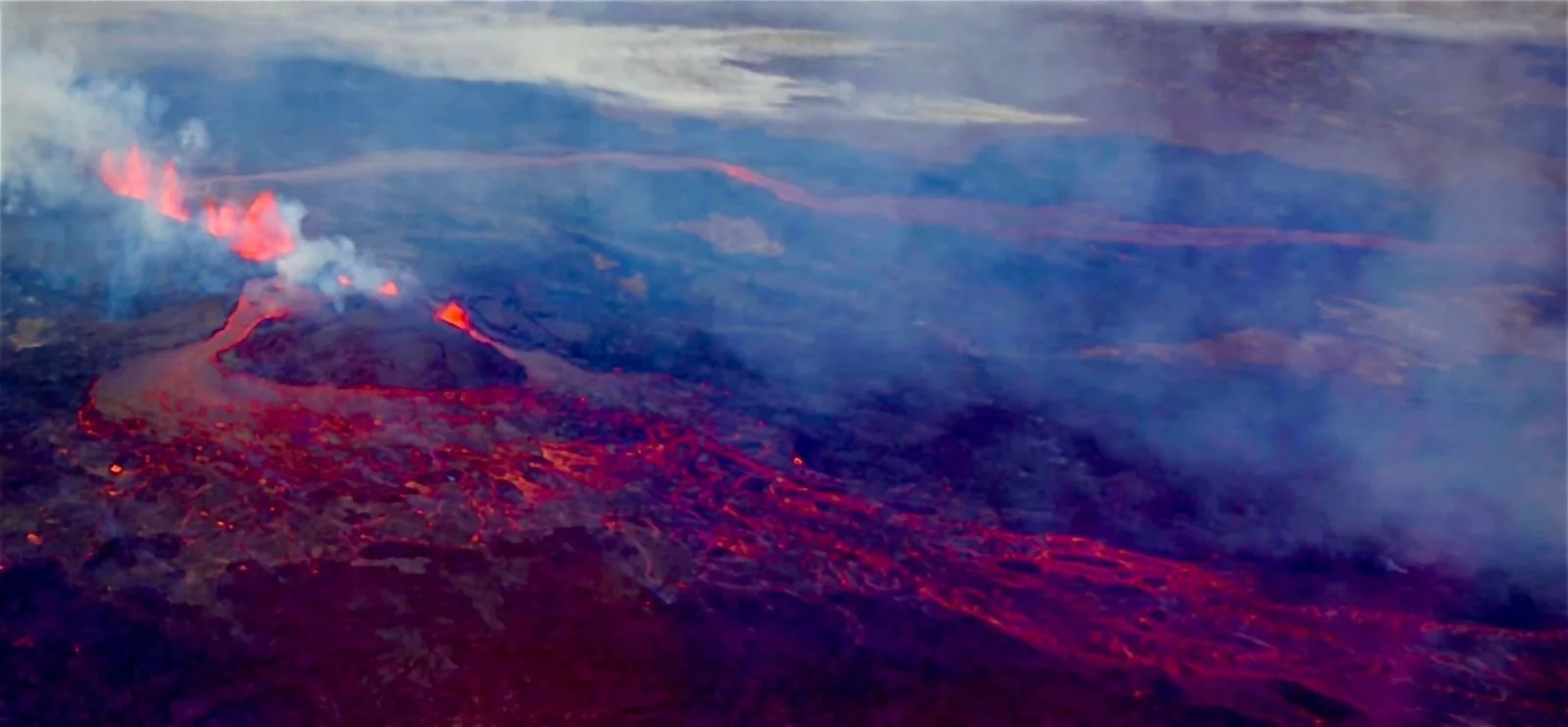
The helicopter hovered and then tilted gently as the pilot repositioned us. At moments it felt like we were dancing in the smoke rising from the earth. The cabin vibrated subtly as heat currents rose upward, and I became acutely aware that this was both breathtakingly beautiful and slightly terrifying.
There is something surreal about watching lava move. It does not rush. It creeps, glows, advances with quiet determination. It reshapes everything in its path without apology. This was not destruction in the dramatic Hollywood sense. It was creation. Iceland building itself again.
I remember gripping the edge of my seat and laughing nervously at one point, half from adrenaline and half from disbelief. How often do you get to witness a live eruption from above? The helicopter felt small against the scale of what was unfolding beneath us, yet incredibly privileged to be there.
I kept thinking how lucky I was. I had landed in Iceland just a day before, with no idea that I would be hovering over molten earth within 24 hours. Timing, opportunity, and a quick decision collided perfectly.
When we finally pulled away and the eruption faded into the distance, flying past the massive crater left behind by the 2021 eruption, I felt that mix of awe and gratitude that only extreme nature seems to bring. It was scary, beautiful and humbling.
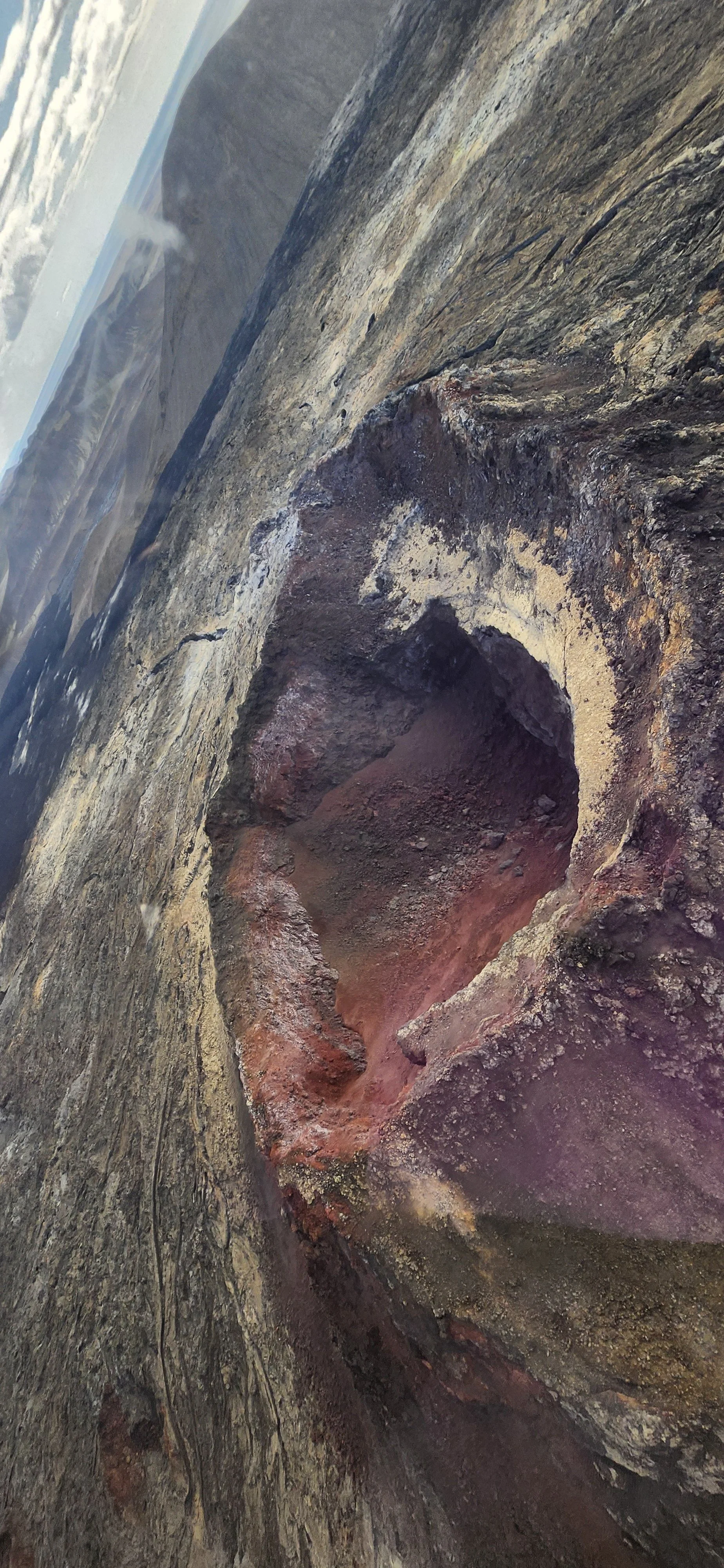
The Reykjanes Peninsula has reminded the world over the past few years that it is very much alive. Its so-called tourist eruptions may be more accessible than the catastrophic events we associate with volcanoes, but they are no less powerful. Watching the planet rewrite itself in real time changes your perspective in ways you do not anticipate.
I came to Iceland for waterfalls, glaciers, and dramatic landscapes. I left having watched the earth breathe fire.
