Arctic vs Antarctica: Which Polar Expedition Is Right for You?
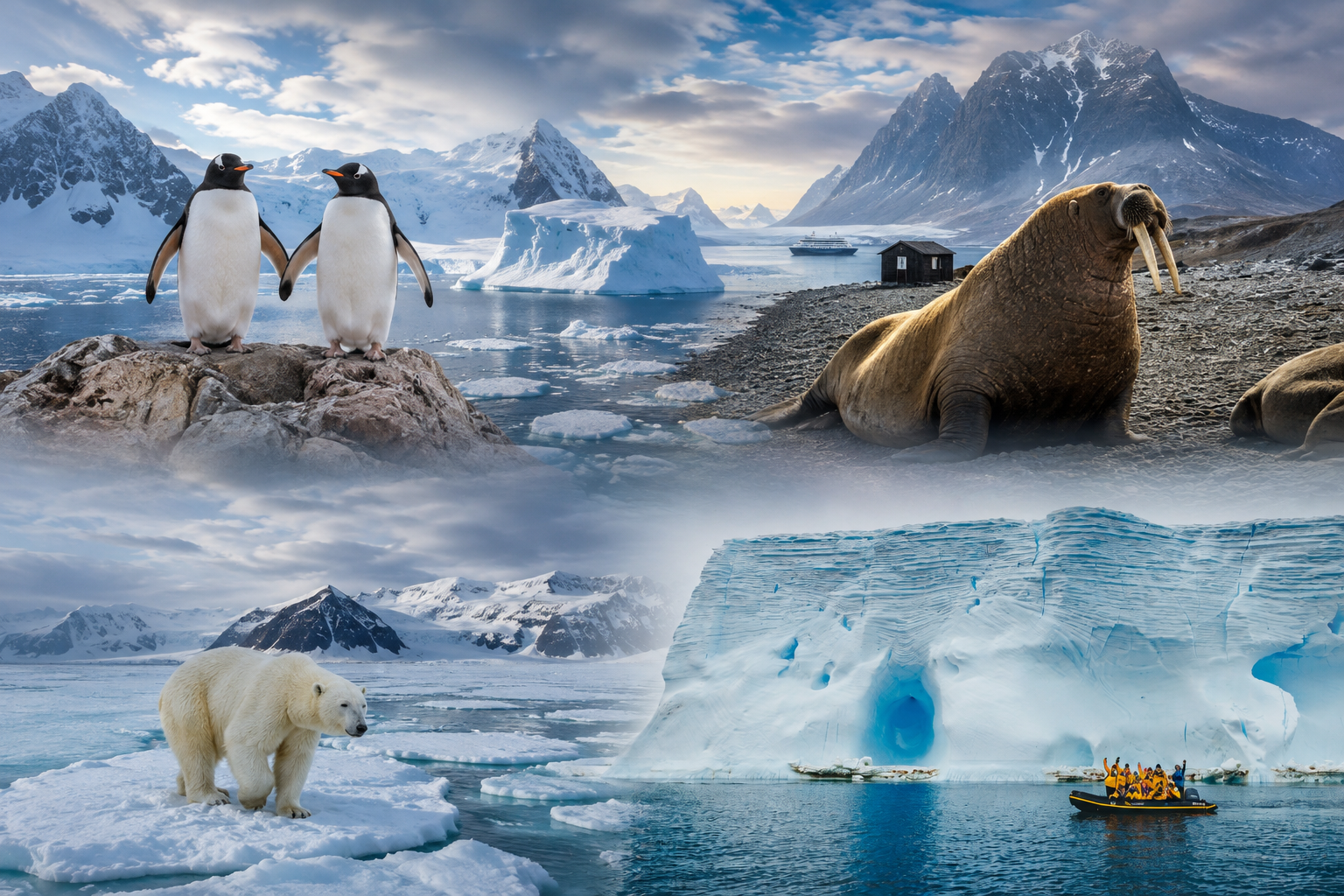
Polar bears or penguins? North or south? Arctic or Antarctica?
If you're considering your first polar expedition, it's easy to imagine that the two ends of the Earth offer roughly the same experience: ice, wildlife, Zodiacs and spectacularly remote landscapes. In reality, they are remarkably different destinations. The geography is different, the wildlife is different, the landscapes are different, and even the way an expedition feels can be completely different.
I've traveled to Antarctica myself and specialize in planning polar and expedition travel. One of the questions that comes up frequently is a simple one: Should I go to the Arctic or Antarctica?
There isn't a universally better choice. But there is usually a better choice for you. Here's how I would decide.
Arctic vs Antarctica at a Glance
| ANTARCTICA | ARCTIC | |
|---|---|---|
| Where? | Southern Hemisphere | Northern Hemisphere |
| Geography | A continent surrounded by ocean | Largely an ocean surrounded by continents |
| Best known for | Penguins, huge icebergs, glaciers and pristine wilderness | Polar bears, walruses, tundra, fjords and Arctic cultures |
| Penguins | Yes | No |
| Polar bears | No | Yes |
| Main expedition season | November to March | Roughly May to September, varying by region |
| Permanent communities | No | Yes |
| Landscape | Icebergs, glaciers, snow-covered mountains | Sea ice, glaciers, fjords, tundra and mountains |
| Wildlife style | Often abundant and highly visible | More search-and-discovery focused |
| Classic first trip | Antarctic Peninsula | Svalbard |
The simplest geographical distinction is that Antarctica is a continent surrounded by ocean, while the Arctic is largely an ocean surrounded by continents. But for travelers, the differences become much more interesting than geography.
Wildlife: Polar Bears or Penguins?
For many travelers, wildlife makes this decision surprisingly easy. If seeing penguins in the wild is part of your polar dream, you need to go south. There are no native penguins in the Arctic.
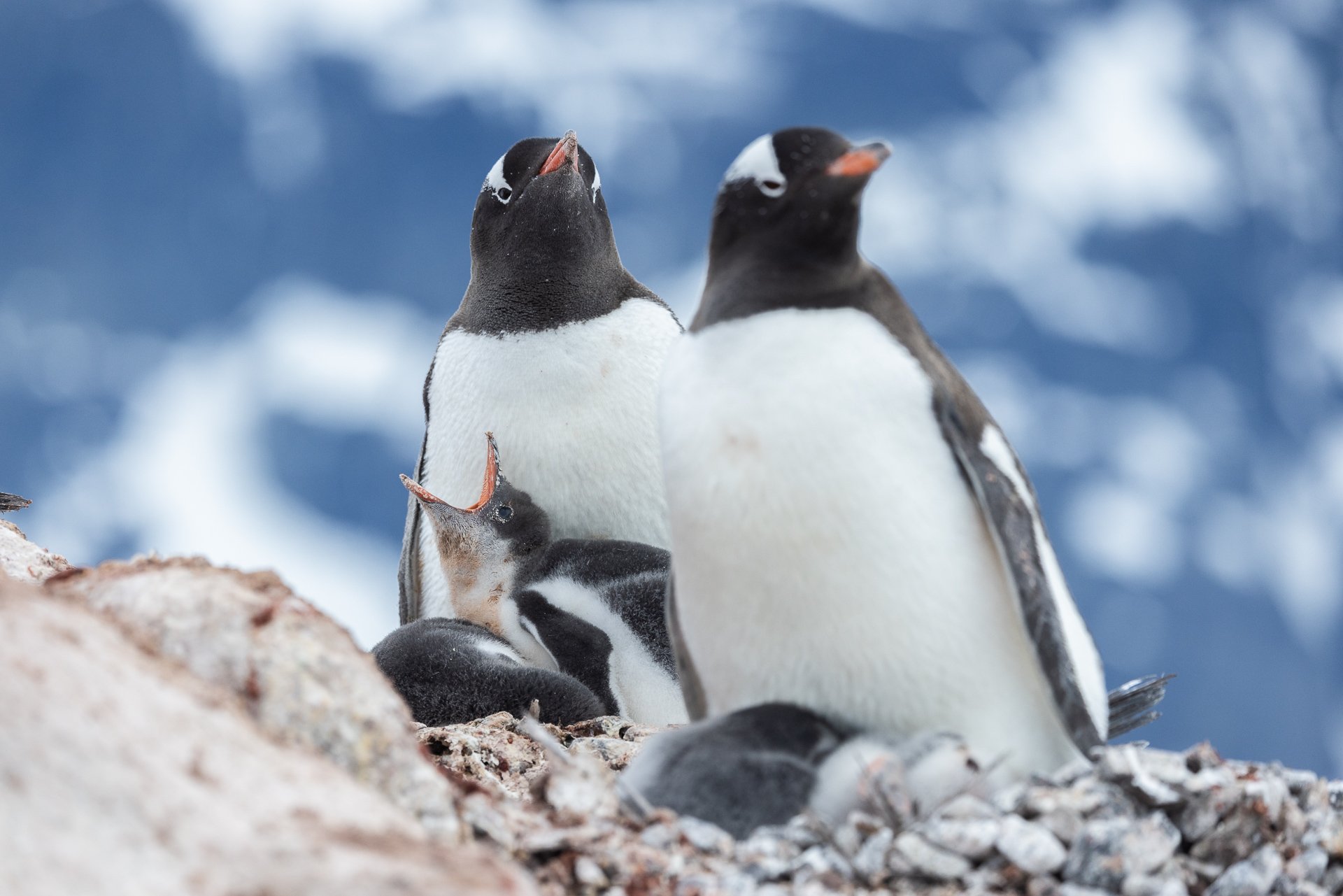
A classic Antarctic Peninsula expedition can bring encounters with gentoo, chinstrap and Adélie penguins, along with seals and whales. Travel farther to places such as South Georgia and the wildlife experience changes again, with vast colonies of king penguins among the extraordinary sights.
One of the remarkable things about Antarctica is how visible its wildlife can be. Penguins gather in colonies, seals rest on ice and beaches, and whales may surface close to your Zodiac or ship. Wildlife is always wild and nothing is guaranteed, but Antarctica can deliver an extraordinary sense of abundance.
The Arctic offers a completely different cast. Its most famous resident is, of course, the polar bear. Svalbard is one of the world's great destinations for searching for polar bears, but there is an important distinction here: polar bear sightings are never guaranteed.
One thing to know about polar bear sightings in Svalbard: regulations require vessels to keep at least 300 meters from a polar bear, increasing to 500 meters from March through June. So even when you are lucky enough to find one, it may be quite far away. Bring a good pair of binoculars, or use the binoculars many expedition ships provide for guests. A long camera lens is also invaluable if polar bear photography is a priority.
In fact, part of the appeal of Arctic wildlife viewing is the search itself. Expedition teams scan enormous landscapes and stretches of sea ice, looking for movement in the distance. A white shape might be ice, a rock or, occasionally, exactly what everyone has been hoping to find.
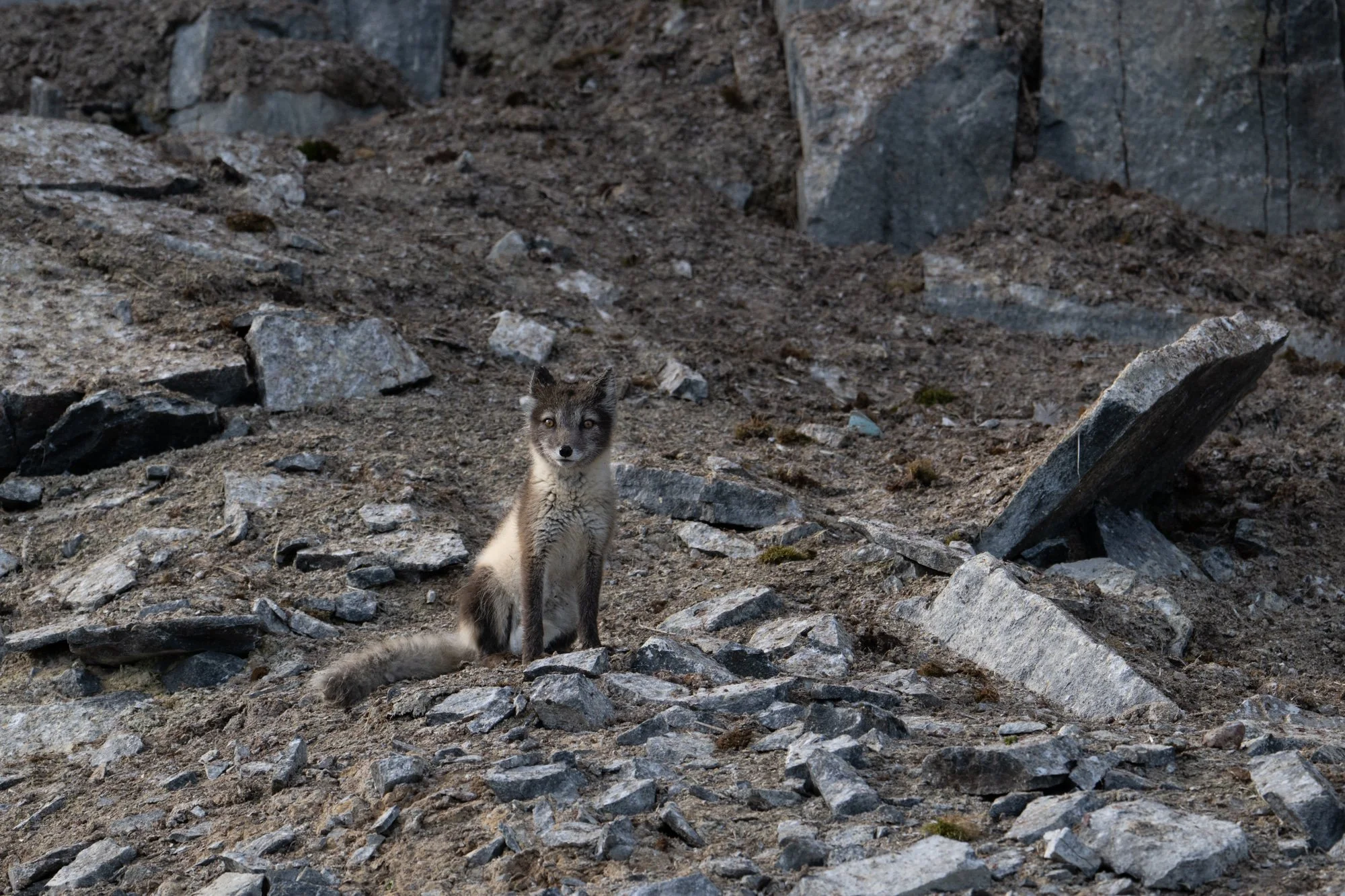
Depending on the region and itinerary, the Arctic can also bring walruses, Arctic foxes, reindeer, musk oxen, whales and immense colonies of seabirds. The Arctic generally has greater terrestrial wildlife diversity, but many of its animals can be considerably more elusive.
If I had to simplify the difference in wildlife experiences, I would put it this way:
Antarctica = encounters. Arctic = discovery.
Antarctica is particularly compelling if your dream involves penguins, seals, whales and large wildlife concentrations. The Arctic is the choice if polar bears, walruses and other northern mammals are what pull you toward the poles.
The Scenery: Both Have Ice, but They Don't Look the Same
This is one of the biggest misconceptions about the two poles. Yes, both destinations have ice, but beyond that they have very different visual personalities.
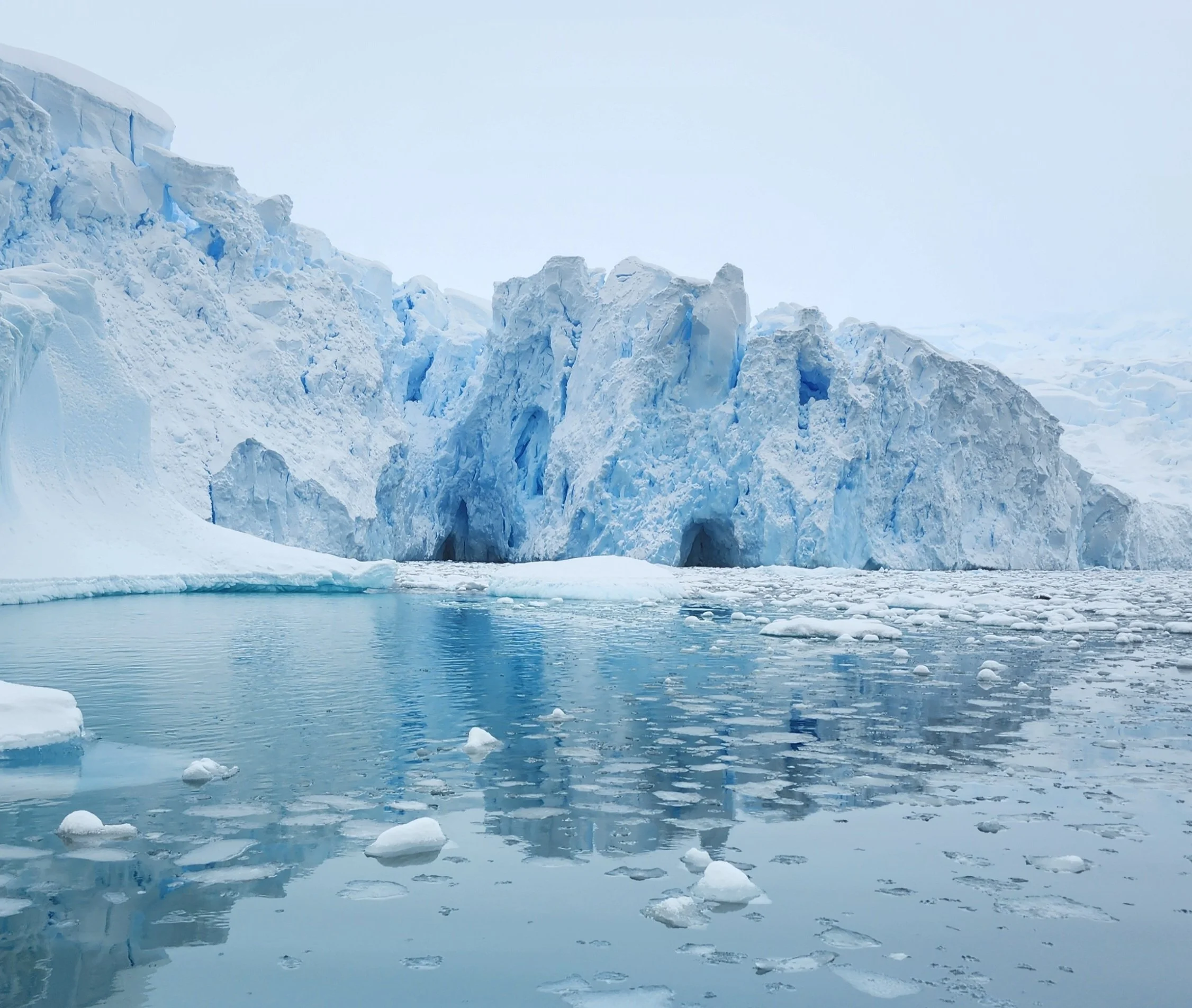
Antarctica can feel almost monochromatic in the most spectacular way. Brilliant snow, deep blue ice, black rock and enormous skies dominate the landscape. On the Antarctic Peninsula, dramatic mountains can rise almost directly from the sea, glaciers pour down slopes and icebergs appear in extraordinary shapes and shades of blue. There are moments when Antarctica doesn't quite look like Earth. It is stark, enormous and wonderfully empty.
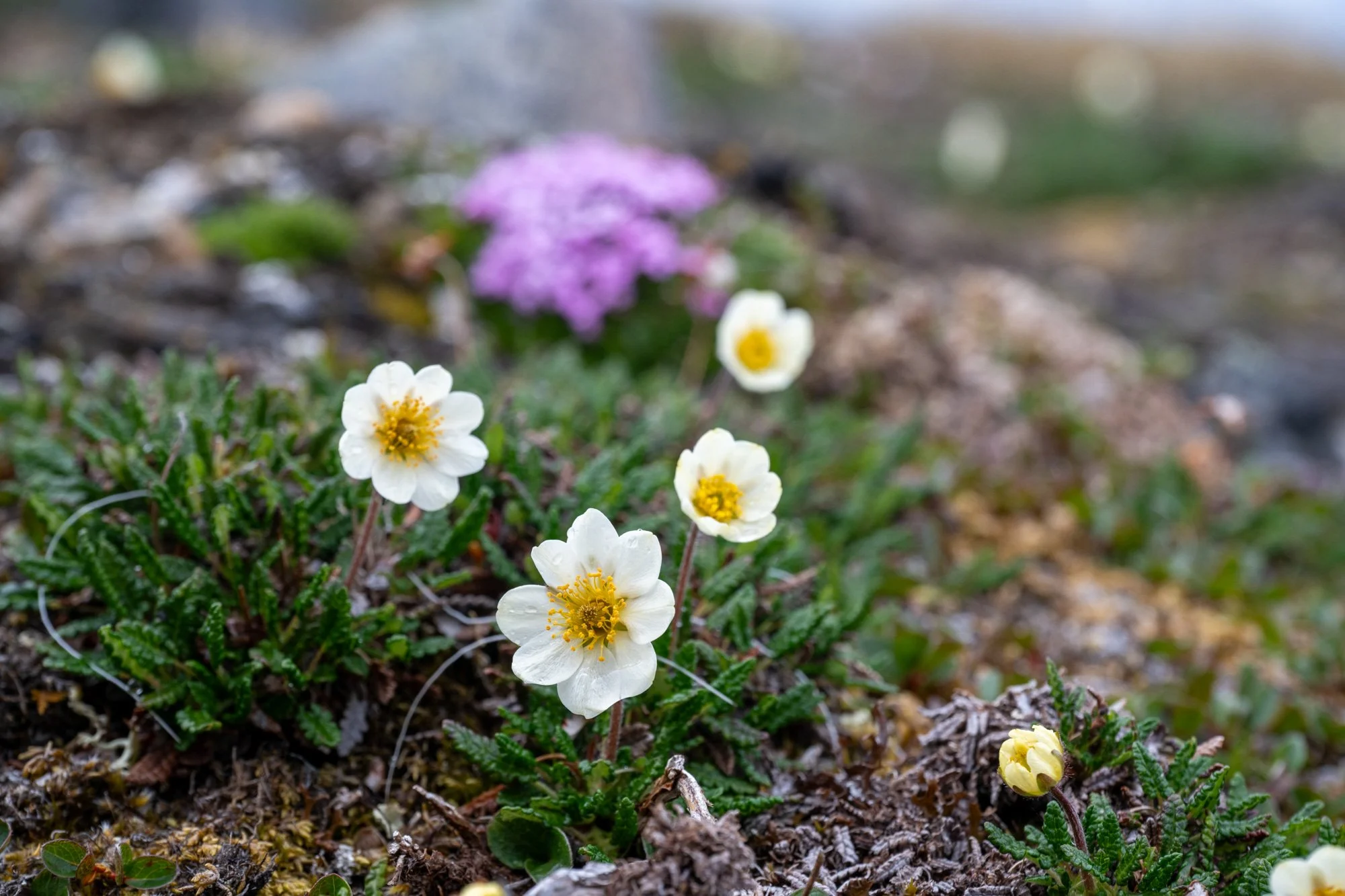
The Arctic can be much more varied. In Svalbard, you might cruise beside a glacier and later walk across exposed tundra. During the Arctic summer, mosses, tiny flowers and landscapes of green, brown and rust can appear alongside snow and ice. Greenland adds another dimension, with gigantic fjord systems, sculptural icebergs and colorful settlements along the coastline. Some Arctic itineraries combine mountains, tundra, sea ice, cliffs and communities within the same journey.
When Can You Visit the Arctic and Antarctica?
One convenient thing about loving both poles is that their primary expedition seasons fall at opposite times of the year.
The Antarctic expedition season generally runs from November through March, during the Southern Hemisphere summer. But choosing when to go isn't simply a matter of finding the warmest month. Early-season voyages can bring heavier snow, pristine landscapes and dramatic ice. December and January have extraordinarily long days and intense activity around penguin colonies, while whales generally become an increasingly important part of the wildlife experience later in the season.
There isn't one single "best month" for Antarctica because the ideal timing depends on what you most want to experience. This is why I look at season and itinerary together, rather than choosing one independently.
If Antarctica is winning this comparison for you, read my How to Choose Your Antarctica Expedition guide next. It goes much deeper into itinerary, ship size, expedition style and the decisions that can significantly change your experience.
The Arctic expedition season broadly runs from late spring through summer and into early fall, but it is more complicated because the Arctic isn't one destination. Svalbard, Greenland and the Canadian High Arctic each have their own seasons and conditions. Earlier voyages can offer more snow and sea ice, while later summer can bring increasingly open water and access to areas that may be difficult to reach earlier in the season.
Your calendar can therefore make the first decision for you. If you're looking for a major polar journey during June, July or August, look north. If you're looking at December, January or February, look south.
What Does an Expedition Actually Feel Like?
The basic rhythm of expedition travel can look similar at both ends of the Earth. You travel aboard an expedition ship, while the expedition team monitors weather, ice and wildlife conditions and adjusts the day's plan accordingly. Days can include Zodiac cruising, shore landings, hiking, wildlife viewing and presentations from specialists aboard the ship. Depending on your voyage, there may also be opportunities for kayaking, paddling, camping and other activities.
The emotional experience, however, is different.
Antarctica feels profoundly remote. There are no towns waiting around the next corner, no hotels and no permanent population. There are research stations and other expedition ships, but much of the experience is simply wilderness. You can wake up, look outside and see nothing but mountains, ocean and ice. That absence of everyday human life is a significant part of Antarctica's power.
The Arctic feels more layered. One day may be entirely about wilderness and wildlife, while another may introduce you to a community where people actually live. You might cruise beside a glacier, hike across tundra, watch for wildlife and encounter traces of exploration or contemporary northern life within the same itinerary.
Antarctica can feel like leaving the human world behind. The Arctic can show you how humans have learned to live within an extreme one.
One of the Biggest Differences: People Live in the Arctic
This is an important difference that can get overlooked when travelers compare the poles. Antarctica has no Indigenous population and no permanent residents. Its human story is largely associated with exploration, scientific research and the extraordinary history of people who attempted to understand and cross one of the harshest environments on Earth.
People, on the other hand, have lived across Arctic regions for thousands of years. Depending on where you travel, an expedition may include visits to Inuit or Greenlandic communities, historic settlements and opportunities to learn about contemporary Arctic life.
For travelers who enjoy culture and human history alongside wildlife and wilderness, this can be a significant reason to choose the Arctic. It doesn't make the destination feel less remote. Instead, it adds another dimension to the journey.
Svalbard, Greenland or the Canadian High Arctic?
This is where saying "I want to go to the Arctic" becomes a little like saying "I want to go to Europe." The next question has to be: Where?
For many first-time Arctic travelers, Svalbard is the classic choice. Wildlife is a major focus, with polar bears providing the headline attraction alongside walruses, Arctic foxes, reindeer, whales and seabirds. The landscapes combine glaciers, mountains, tundra and sea ice, and the archipelago is relatively accessible through Longyearbyen.
Greenland offers a different experience. The scale of its landscapes can be extraordinary, with huge fjord systems, immense icebergs, hiking and colorful coastal settlements. Greenland can be particularly compelling for travelers who want dramatic scenery combined with culture and communities.
The Canadian High Arctic can feel more remote and expansive still. Depending on the voyage, itineraries may combine wildlife, Inuit communities, exploration history and routes associated with the Northwest Passage.
Even after you've chosen the Arctic, therefore, you haven't chosen your expedition. The same is true in Antarctica. An Antarctic Peninsula voyage is very different from an itinerary incorporating South Georgia and the Falkland Islands, crossing the Antarctic Circle or exploring the Weddell Sea.
This is why I always start with the experience a traveler wants before looking at individual ships. You can see more about how I approach these trips on my Polar Expeditions page.
Is the Arctic or Antarctica Easier to Get To?
For many North American travelers, some Arctic destinations can be somewhat easier to incorporate into a larger trip. A Svalbard expedition commonly involves traveling through mainland Norway and then flying to Longyearbyen. Greenland and the Canadian High Arctic use different gateways depending on the itinerary.
Antarctica generally requires considerably more southbound travel. A traditional Antarctic Peninsula expedition usually involves traveling through South America, often reaching Ushuaia at the southern tip of Argentina before boarding your ship and crossing the Drake Passage. Fly-cruise itineraries provide another option, allowing travelers to fly across the Drake Passage for part or all of the journey.
The journey to Antarctica takes time, but for many travelers that contributes to the feeling that they are genuinely going to the end of the Earth.
If you'd like to see what the experience itself is actually like, I wrote about my own journey aboard Quark Ultramarine, from life aboard the ship to the landings and wildlife encounters.
How Long Do You Need?
There is no single Arctic or Antarctic trip length because itinerary design varies enormously.
A classic Antarctic Peninsula expedition might require roughly a week and a half to two weeks once the expedition logistics are included. Add South Georgia and the Falkland Islands and you can easily be looking at a journey of around three weeks.
Arctic trips can range from relatively compact Svalbard expeditions to much longer journeys through Greenland, the Canadian High Arctic or the Northwest Passage.
Available vacation time can therefore be a bigger factor than people initially realize. Sometimes a traveler tells me that Antarctica is their dream, and then I discover that they have exactly nine days available. That changes the conversation.
Start with how much time you realistically have, then determine what kind of expedition is possible within it.
Is the Arctic or Antarctica More Expensive?
There isn't a useful universal answer. Both can be expensive, and the price of a polar expedition depends heavily on itinerary length, ship, cabin category, operator, route, season, charter flights and included activities.
A shorter Arctic expedition can cost considerably less than a three-week Antarctica, South Georgia and Falklands voyage. At the same time, a premium Arctic expedition can easily cost more than an entry-level Antarctic Peninsula trip.
So I wouldn't choose between the poles based on the assumption that one is automatically cheaper. Choose the experience first, then compare realistic options within your budget.
If you're leaning toward Antarctica, my How Much Does It Cost to Visit Antarctica? guide breaks down the major costs and the price differences travelers should expect.
Arctic vs Antarctica: Which One Is Right for You?
| IF THIS MATTERS MOST... | I'D LEAN... |
|---|---|
| Penguins | Antarctica |
| Polar bears | Arctic |
| Huge wildlife colonies | Antarctica |
| Terrestrial wildlife variety | Arctic |
| Enormous icebergs and stark landscapes | Antarctica |
| Tundra, fjords and more landscape variety | Arctic |
| Complete escape from inhabited places | Antarctica |
| Wilderness plus culture and communities | Arctic |
| Travel in December to February | Antarctica |
| Travel in June to August | Arctic |
| Completing all seven continents | Antarctica |
| A classic polar bear safari-style search | Arctic |
Beyond everything in that table, there is another factor that matters more than any comparison chart: Which destination are you emotionally drawn to?
If you have dreamed about Antarctica for twenty years, I am probably not going to talk you into Svalbard simply because the flights are easier. And if seeing a polar bear in the wild has been on your bucket list since childhood, Antarctica's spectacular penguins aren't a substitute.
Polar expeditions are significant journeys. Go where the pull is.
Which Should I Do First: The Arctic or Antarctica?
If you eventually want to experience both poles, does it matter which one comes first? Not really. But there are some circumstances where I would lean strongly one way.
I would choose Antarctica first if you've always dreamed specifically about setting foot on the seventh continent, if penguins and abundant wildlife are central to the dream, or if your idea of a polar expedition is dominated by immense icebergs, glaciers and dramatic white landscapes. The absence of a permanent human population also gives Antarctica a sense of isolation that is difficult to replicate elsewhere. And, of course, if completing all seven continents matters to you, the decision may already have been made.
I would choose the Arctic first if seeing a polar bear in the wild is one of your great wildlife ambitions, if you enjoy the idea of searching for animals across huge landscapes, or if you want wilderness mixed with human culture and history. It is also an obvious choice if you want to travel during the Northern Hemisphere summer or combine an expedition with time elsewhere in Scandinavia or another northern destination.
If you already know you will eventually do both, I wouldn't overthink the order. Choose whichever has the right itinerary at the right time for you now. After you've experienced one pole, there is a good chance you will stop thinking of the other as an alternative. It simply becomes the next trip. I have my Arctic trip already booked!
Which Is More Dramatic?
If you push me to choose purely on visual drama, I would give Antarctica the edge.
The scale can feel almost impossible. Mountains, glaciers, enormous icebergs and vast stretches of white create a landscape unlike almost anywhere else. But dramatic isn't the same thing as better.
The Arctic offers something Antarctica cannot: a richer combination of landscape types, terrestrial wildlife and human culture. If Antarctica can feel otherworldly, the Arctic often feels alive in a completely different way.
Which Is Better for Wildlife?
This depends entirely on what kind of wildlife experience excites you. For abundance and relatively visible wildlife, I would lean Antarctica. For species diversity and the thrill of tracking and searching, I would lean Arctic.
Antarctica = encounters. Arctic = discovery.
It is a simplification, but it captures the emotional difference surprisingly well.
Which Is Better for Photography?
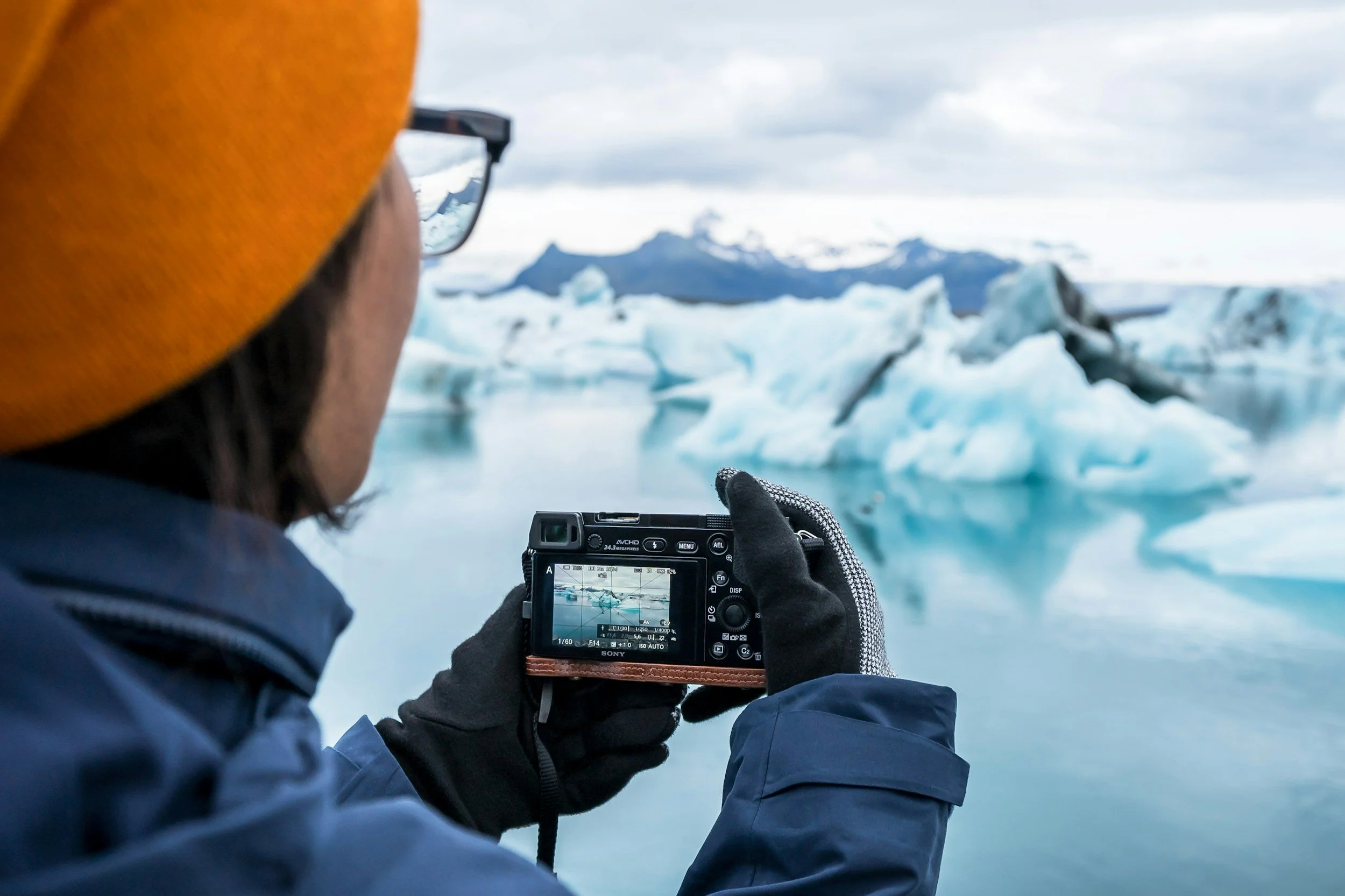
Both regions are extraordinary for photography, but for different reasons.
Antarctica gives photographers enormous ice formations, clean horizons, dramatic mountain scenery, wildlife colonies and a beautifully stark visual palette. The Arctic can offer greater variety: wildlife, colorful settlements, tundra, mountains, flowers, sea ice and enormous northern skies.
Wildlife photographers dreaming of polar bears may choose the Arctic without hesitation. Landscape photographers may find the decision much harder.
Can You See the Northern Lights on an Arctic Expedition?
Usually, the Northern Lights should not be the reason you choose a classic Arctic expedition cruise. Many polar expedition voyages take place during the long daylight of the Arctic summer, including periods when the sun barely sets or doesn't set at all. You need darkness to see the aurora.
Northern Lights trips certainly exist across the Arctic, but they are generally planned around a different season and travel style. If your priority is polar bears and expedition cruising, plan around that. If your priority is the Northern Lights, plan around darkness.
Trying to force both into the same journey can mean compromising the experience you actually came for.
What About the Midnight Sun?
This is something you can experience in both polar regions during their respective summers.
In the high Arctic, summer can bring extraordinarily long days and, above certain latitudes, periods when the sun remains above the horizon around the clock. Antarctica also experiences extremely long summer daylight, with conditions varying by latitude and time of season.
For expedition travel, this is more than a novelty. Long daylight gives the expedition team flexibility, and wildlife doesn't care what time dinner is scheduled. If something wonderful is happening outside late in the evening, there may still be plenty of light to experience it.
Is Antarctica Colder Than the Arctic?
Overall, yes. Antarctica is the colder environment. But that fact can be misleading when you're planning an expedition because you aren't visiting Antarctica's interior in the depths of winter.
Most expedition travelers visit coastal regions during the Southern Hemisphere summer, just as most Arctic expedition cruises operate during the warmer northern months. What matters isn't the record-low temperature at either pole. It is the weather where your particular expedition is going during the weeks you're actually there.
With the right clothing and preparation for wind, moisture and rapidly changing conditions, both regions are very manageable for most appropriately prepared travelers.
Can You Visit Both in the Same Year?
Absolutely. Their opposite seasons actually make this unusually convenient. You could travel to the Arctic during the Northern Hemisphere summer and Antarctica during the Southern Hemisphere summer within the same calendar year.
Would I recommend doing that for your first two polar expeditions? Possibly. But I would leave enough time between them to appreciate just how different they are.
These aren't destinations that deserve to blur together.
Frequently Asked Questions About the Arctic vs Antarctica
Are the Arctic and Antarctica the same thing?
No. Antarctica is a continent surrounding the South Pole. The Arctic is a vast northern region centered largely around the Arctic Ocean and bordered by parts of North America, Europe and Asia.
Are there polar bears in Antarctica?
No. Wild polar bears live in the Arctic. If polar bears are the reason you're planning a polar trip, look at destinations such as Svalbard and parts of Greenland and the Canadian Arctic.
Are there penguins in the Arctic?
There are no native penguins in the Arctic. Penguins are Southern Hemisphere birds, with Antarctica and the subantarctic islands offering some of the world's great penguin encounters.
Which has more wildlife, the Arctic or Antarctica?
It depends on how you define "more." The Arctic has greater terrestrial wildlife diversity, while Antarctica can offer extraordinary concentrations of wildlife, particularly penguins and seals. Arctic wildlife can also be considerably more elusive, which makes searching for it part of the experience.
Which is colder, the Arctic or Antarctica?
Antarctica is colder overall. For expedition travelers, however, it is more useful to compare conditions during the actual expedition season and in the particular region you're considering.
When is the best time to visit Antarctica?
The main expedition season runs approximately from November through March. The best month depends on what matters to you, including snow conditions, penguin activity, whales, photography and the itinerary you want to experience.
When is the best time to visit the Arctic?
Most Arctic expedition cruising takes place during the Northern Hemisphere's late spring, summer and early fall. The exact window varies considerably among Svalbard, Greenland, the Canadian High Arctic and other Arctic regions.
Which is more expensive, the Arctic or Antarctica?
Neither is automatically more expensive. Cost depends much more on itinerary length, operator, ship, cabin category, route and inclusions.
Which is better for a first expedition cruise?
If you want immediate visual drama, penguins and the iconic seventh-continent experience, Antarctica is difficult to beat. If polar bears, varied landscapes and the combination of wilderness and human culture are more important to you, start with the Arctic.
Can I visit the North Pole on an Arctic expedition?
Yes, specialized expedition voyages travel to the geographic North Pole, but most Arctic expedition cruises do not. Visiting Svalbard, Greenland or the Canadian High Arctic is still very much an Arctic expedition without reaching 90° North.
Do I need to be very fit for a polar expedition?
Not necessarily. Activity levels vary considerably by itinerary and operator. Many travelers participate primarily in Zodiac cruises and easier shore landings, while others choose hiking, kayaking and more active excursions. Mobility can be more important than athletic fitness because getting in and out of Zodiacs and walking on uneven terrain are common parts of expedition travel.
Are polar expeditions luxury cruises?
Some are, and some very deliberately are not. The polar market ranges from adventure-focused expedition vessels to highly luxurious ships with large suites, multiple restaurants, spas and polished service.
This is one reason choosing the right ship matters so much. If you're considering Antarctica specifically, my How to Choose Your Antarctica Expedition guide explains how I think about expedition-first operators, luxury ships, itineraries and onboard experience.
So, Arctic or Antarctica?
If you picture thousands of penguins, immense blue icebergs, glaciers and a continent almost entirely without signs of everyday human life, go south.
If you picture searching the sea ice for a polar bear, watching walruses, hiking across tundra, cruising enormous fjords and experiencing both wilderness and Arctic culture, go north.
And if you want both? You are in good company.
The real question may not be Arctic or Antarctica. It may simply be: which one first?
Once you've answered that, the decisions about region, itinerary, season, ship and expedition operator matter just as much. Those are exactly the choices I help my clients navigate.
Explore more of my Polar Expeditionsresources, or Start Planningand tell me what you're dreaming about. We'll figure out which end of the Earth is calling you first.